Блог
Својства маслиновог уља, састојци и врсте маслиновог уља


Olive Oil Properties – Olive Oil Ingredients – Olive Oil Types
Sun, stone, drought, silence and solitude: these are the five ingredients that, according to folk traditions, create the ideal habitat for the olive tree. We treasure extra-virgin olive oil for its nutritional and salutary virtues. Researchers reports show that extra-virgin olive oil is the most digestible of the edible fats: it helps to assimilate vitamins A, D and K; it contains so-called essential acids that cannot be produced by our own bodies; it slows down the aging process; and it helps bile, liver and intestinal functions. The olive oil is also valued for its culinary virtues and organoleptic properties as well: flavour (sapor), bouquet (aroma), and colour (color).
Climate, soil, variety of olive tree (cultivar) and time of olive harvest account for the different organoleptic properties of different olive oils. Certain extra-virgin olive oils are blends of varieties of olives; other olive oils are made from one cultivar (olive tree variety). The European Community gives the following parameters:
- Extra-virgin olive oil: has perfect taste and its the highest quality olive oil; it has a minimum organoleptic rating of 6,5 out of 10, low acidity (1% or less), and is untreated.
- Olive oil: has a minimum organoleptic rating of 5,5, a maximum of 2% acidity and is untreated.
- Производња свих осталих маслинових уља подразумева третмане.
Extra-virgin olive oil is produced in almost all regions of Greece. The leading producers are Crete island, the Peloponnese, Mytilene island, and Chios island. In Italy, Tuscany produces an assortment of extra virgin oils and olive oils that many do not resemble each other. In Umbria (Italy), it is so widely produced that it would be hard to imagine the landscape without the abundance of olive trees. Apulia is home to an impressive one-third of Italy’s olive trees. The top location is Puglia in south Italy.
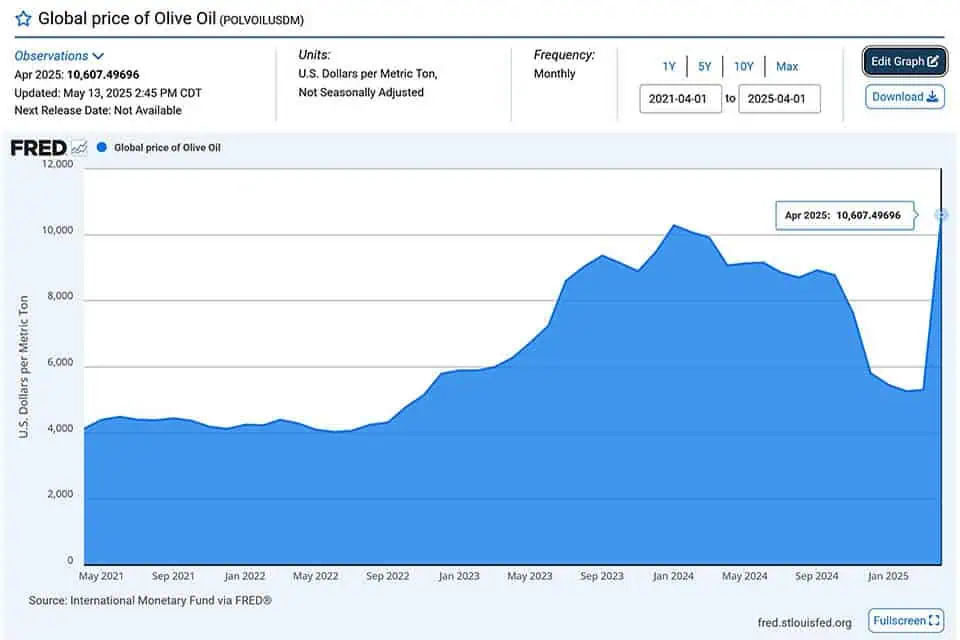
The price of extra-virgin olive oil varies greatly. Two factors are influential: where the olives are grown and which harvesting methods are implemented. Certain locations yield more bountiful harvests; consequently their olive oil is sold for less. Olive trees planted near the sea can produce up to 20 times more fruit than those planted inland, in hilly areas like Tuscany. It is in these land-locked areas that the olive trees’ habitat is pushed to the extreme; if the conditions were just a little more severe, the olive trees would not survive. Extra-virgin oils produced from these trees have higher organoleptic scores.
Olive Oil Ingredients
What are the ingredients in pure olive oil? The chief active components of olive oil include oleic acid, phenolic constituents, and squalene.
Olive oil consists mainly of oleic acid (up to 83%), with smaller amounts of other fatty acids including linoleic acid (up to 21%) and palmitic acid (up to 20%). Approximately, 98%–99% of EVOO – Extra Virgin Olive Oil (the saponifiable fraction) is made up of triglycerides in the form of mostly MUFAs (oleic acid), considerable amounts of polyunsaturated fats (linoleic and α-linolenic), and small amounts of saturated fats (palmitic by 7,5%–20% and stearic acid by 0,5%–5%).
Thanks to its status as a spotlight food in the Mediterranean Diet (and the Greek / Cretan Diet in particular), and thanks to extensive research on its unique phytonutrient composition, olive oil has become a legendary culinary oil with very difficult-to-match health benefits by other edible oils. Among its extensive list of phytonutrients, no single category of nutrients of olive oil is more important than its полифеноли. The polyphenol content of this delicious oil is truly amazing!
Olive oil is very high in monounsaturated fats and contains a modest amount of vitamins E and K. Extra virgin olive oil is also loaded with antioxidants, some of which have powerful health benefits. The olive fruit and compression-extracted olive oil have a wide range of therapeutic beside the culinary applications in human nutrition.
The list below shows some of the key polyphenols found in olive oil, organized by their chemical category:
Most of the polyphenols in this list have been shown to function both as антиоксиданси and also as anti-inflammatory nutrients in the body. The very number and variety of polyphenols in olive oil helps explain the unique health benefits of this culinary oil.
The exact chemical composition of olive oil can vary depending on factors like the olive variety, climate and soil of the olive grove, growing conditions, harvesting methods and processing methods for the extraction of olive oil from the olive fruit.
Learn more about the Olive Oil ingredients, chemical composition and more…
Врсте маслиновог уља
Which are the types of Olive Oil?
Types of Olive Oil:
| Екстра девичанско маслиново уље | Екстра девичанско маслиново уље је прво цеђење маслина и најквалитетније маслиново уље. Нема никаквих недостатака и изузетно ниску киселост од не више од 0,8%. Има врхунски укус и богат, воћни мирис. | Девичанска и екстра девичанска уља су најбоља некувана у салатама, за преливање преко хране (као што је тестенина) и за умакање хлеба. Такође је најбоље уље за употребу у чорбама и запеченим јелима. Додаје хармонију јелима. |
| Органско екстра девичанско маслиново уље | Extra virgin olive oil from organic farming, free of chemical agents – extra virgin olive oil produced from olives that have been grown and harvested in an organic manner. The growing, harvesting, manufacturing and packaging has been reviewed by an accredited organic certifying agency, and they document that every step in the process has been up to par | |
| Девичанско маслиново уље | Девичанско маслиново уље мора имати добар укус. Нешто је нижег квалитета од екстра девичанског маслиновог уља; има недостатке од 0 до 2,5 и киселост мању од 2%. | Девичанска и екстра девичанска уља су најбоља некувана у салатама, за преливање преко хране (као што је тестенина) и за умакање хлеба. Такође је најбоље уље за употребу у чорбама и запеченим јелима. Додаје хармонију јелима. |
| Обично девичанско маслиново уље | Мане од 2,5 – 6 и садржи не више од 3,3% киселости. | Погодно за пржење и печење са. |
| Лампанте уље | Више од 3,3%. Намењено је за рафинирање или техничку употребу и није погодно за људску исхрану. техничка употреба и није погодно за људску исхрану. | Није погодно за људску исхрану. |
| Маслиново уље | Ово је мешавина чистих маслинових уља за додавање укуса и рафинисаних маслинових уља. Не више од 1% киселости. | Ова уља добро подносе топлоту и погодна су за пржење и печење. |
| Сирово маслиново уље за помаду | Намењено за рафинирање за људску употребу или техничку употребу. Мора имати киселост мању од 1,5%. | |
| Рафинисано маслиново уље за помаду | Сирова нафта која је рафинисана. | Погодно за пржење и печење са. |
Chemical Composition of Olive Oil / Olive Oil Ingredients
(what are the ingredients in pure olive oil and extra virgin olive oil? which are the olive oil chemical characteristics? https://critida.com/olive-oil-ingredients-composition/ )
 Велепродаја маслиновог уља – добављачи и дистрибутери маслиновог уља на велико
CRITIDA BIO CRETAN OLIVE OIL – Произвођачи врхунских критских кулинарских производа: Наши прехрамбени производи се извозе широм света у преко 40 земаља, од 1998. године – Придружите нам се!
Ми смо породична компанија дуга вековима (основана 1912. године) која се бави производњом EVOO маслиновог уља на острву Крит у Грчкој. Наше врхунско критско екстра девичанско маслиново уље и кулинарски прехрамбени производи извозе се у преко 40 земаља широм света пажљиво одабраној мрежи партнера. КОНТАКТИРАЈТЕ НАС, ПОСТАНИТЕ НАШ СЛЕДЕЋИ ВРЕДНИ ПОСЛОВНИ ПАРТНЕР! за екстра девичанско маслиново уље (EVOO) – Органско (Био) екстра девичанско маслиново уље (Органско EVOO) – Грчке стоне маслине – Балзамико сирће – Деликатесе, све са Крита, Грчка
Придружите нам се, постаните добављач / велетрговац маслиновог уља!