Olive Oil Ingredients – composition of the Olive Oil
The Olive Oil Ingredients
Learn more about the Chemical Characteristics of Olive Oil – Fatty Acids, Trans Fatty Acids, Long Chain Fatty Acids, Percentage of Linolenic Acid allowed in olive oil, “Essential” Fatty Acids, Free Fatty Acids (FFA) and Olive Oil Acidity, Polyphenols (Antioxidants), Peroxides, Pigments and Color, Vitamins, Polycyclic Aromatic Hydrocarbons (PAHs) and more…
An informative video on Olive Oil – check the video for more olive oil chemistry, how to keep fresh, how to best use it to give your food a flavor boost
Suntem o companie de familie cu o vechime de secole (înființată în 1912) care produce ulei de măsline EVOO pe insula CRETA, GRECIA. Uleiul nostru de măsline extravirgin cretan premium și produsele culinare sunt exportate în peste 40 de țări din întreaga lume către o rețea de parteneri atent selecționați. CONTACTAȚI-NE, FII URMĂTORUL NOSTRU PARTENER DE AFACERI VALOAS! pentru Ulei de măsline extravirgin (EVOO) – Ulei de măsline extravirgin organic (Bio) (EVOO organic) – Măsline de masă grecești – Oțet balsamic – Mezeluri, toate din CRETA, GRECIA.
Majoritatea polifenolilor din această listă s-au dovedit a funcționa atât ca antioxidanți și, de asemenea, ca antiinflamator nutrienți din organism. Însăși numărul și varietatea polifenolilor din uleiul de măsline ajută la explicarea beneficiilor unice pentru sănătate ale acestui ulei culinar.
Compoziția chimică exactă a uleiului de măsline poate varia în funcție de factori precum soiul de măslin, clima și solul din plantația de măslini, condițiile de creștere, metodele de recoltare și metodele de procesare pentru extragerea uleiului de măsline din fructele de măslin.
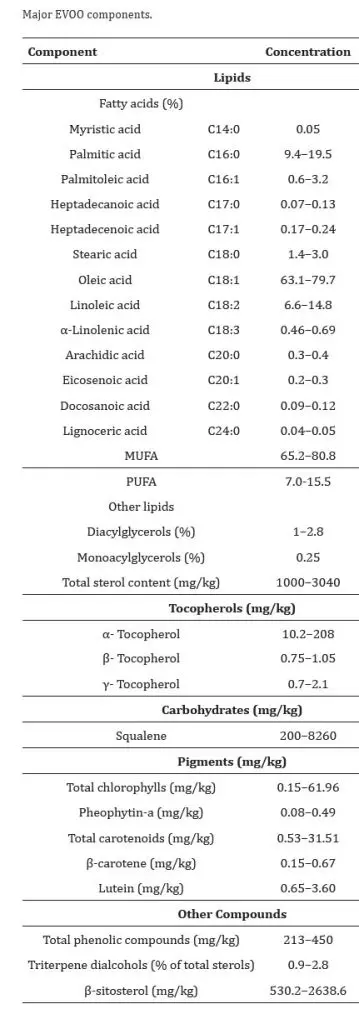
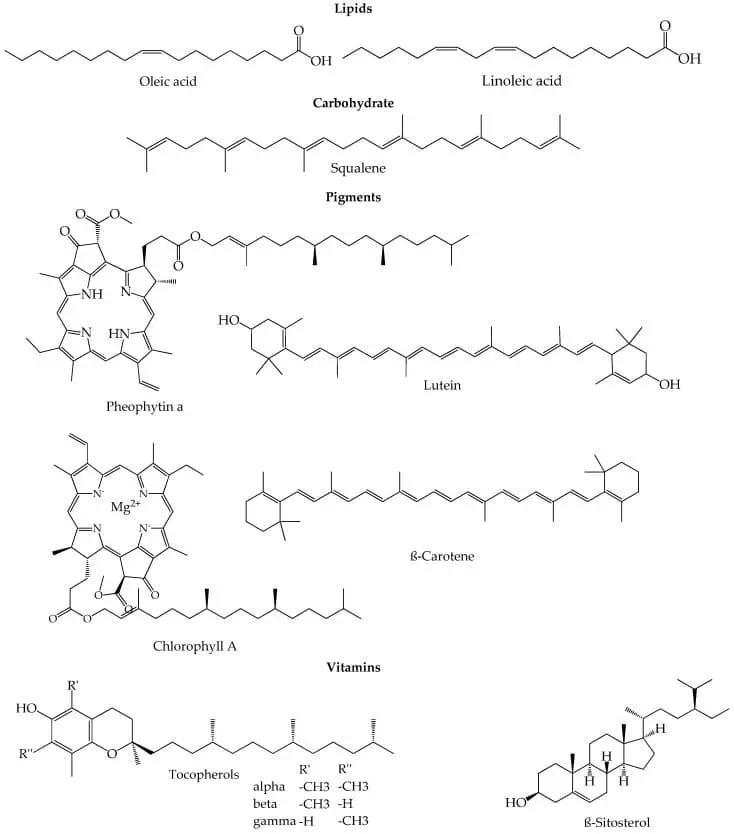
ingredients of Extra-virgin Olive Oil – EVOO main components
Nutrient Composition of Olive Oil & comparison with Nutrient Composition of other oils
List of the Nutrient Composition and Ingredients of Extra Virgin Olive Oil and Olive Oil vs. other oils
Nutrient composition of extra virgin olive oil:
Extra virgin olive oil is rich in heart-healthy fats, along with vitamin E and vitamin K.
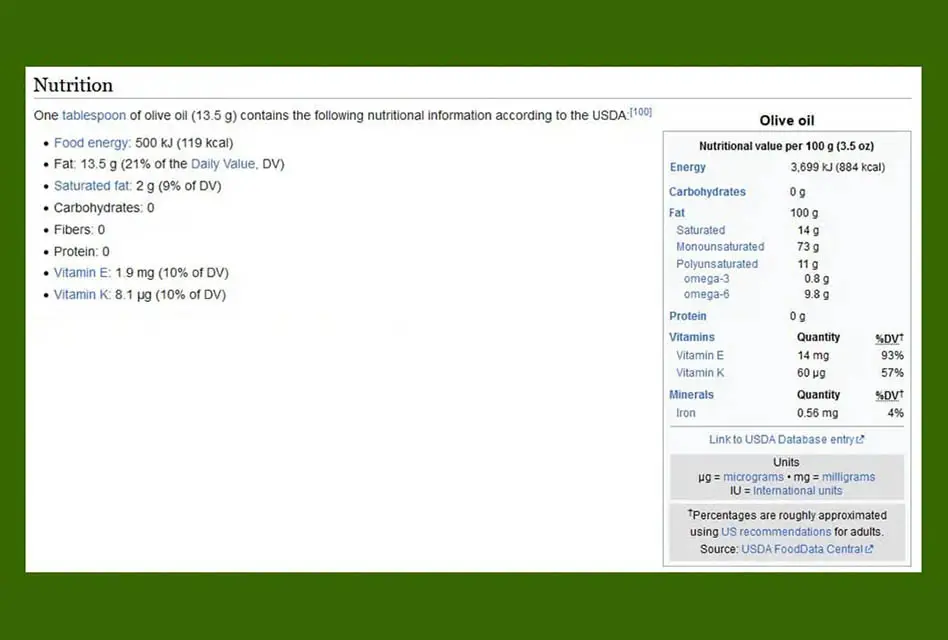
A tablespoon (about 14 grams) of olive oil contains the following nutrients:
Calories: 119
Saturated fat: 14% of total calories
Monounsaturated fat: 73% of total calories (mostly oleic acid)
Polyunsaturated fat (PUFA): 11% of total calories
Vitamin E: 13% of the Daily Value (DV)
Vitamin K: 7% of the DV
Extra virgin olive oil is a great source of antioxidants, which are compounds that help fight inflammation and chronic disease.
The oil’s main antioxidants include the anti-inflammatory oleocanthal, as well as oleuropein, a substance that protects LDL (bad) cholesterol from oxidation.
Some people have criticized olive oil for having a high omega-6 to omega-3 ratio. However, its total amount of polyunsaturated fats is still relatively low, so you probably don’t need to worry.
In addition to extra virgin olive oil, there are many other popular cooking oils available, including regular olive oil, canola oil, vegetable oil, avocado oil, and coconut oil.
Here is a closer look at how extra virgin olive oil compares to these other types of oils:
Yes, olive oil is gluten-free by nature when we’re talking about the main classes (types) of olive oil (pure olive oil, virgin olive oil, extra virgin olive oil). For all olive oils the only real ingredient in olive oil is the olives fruit extract…
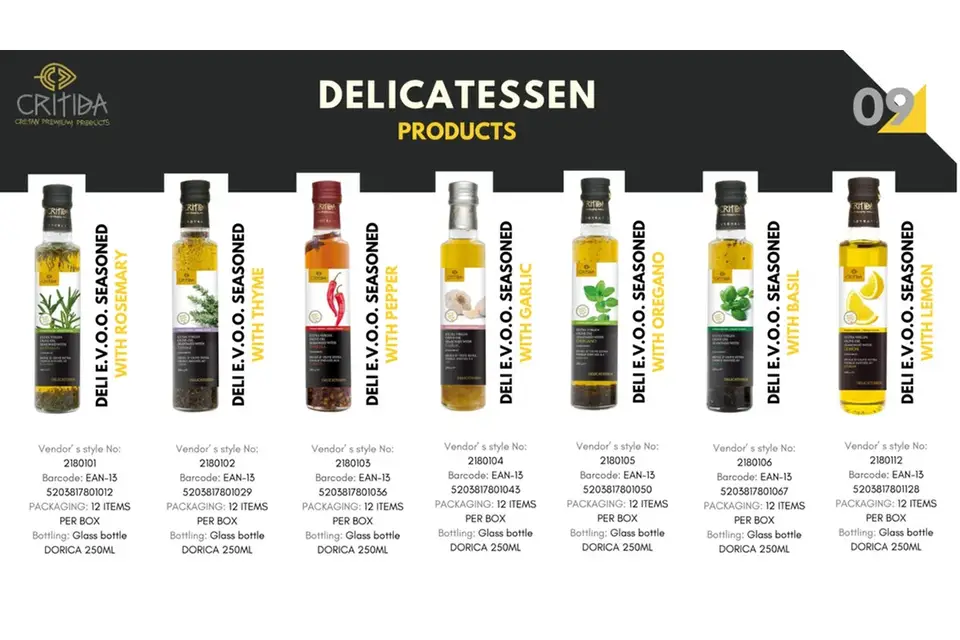
There are two exceptions, situations where you need to be a bit careful: 1) when you are dealing with an infused or flavored olive oil. 2) When olive oil is made in a facility that also produces gluten-containing foods
When olive oil is produced in a shared facility that produces gluten-containing foods, there may be a slight possibility for cross-contamination and although the amount of gluten present in an olive oil would be extremely low in these instances, there could potentially be a concern for someone with celiac disease. Its recommended you look for olive oil that is certified gluten-free, or produced in an allergen-free facility.
Infused/Flavored olive oils, the only time you may really run into trouble is when you’re dealing with smoke-flavored olive oil – whether it’s olive oil or any other cooking oil such as canola oil or vegetable oil. In some “natural smoke flavoring,” the gluten-containing grain barley is used as an ingredient. So, these oils should be avoided unless the oil has a gluten-free certification or you’ve ensured that the manufacturer uses a gluten-free version of smoke flavoring.
Is Olive Oil vegan?
Olive oil is a single-ingredient plant-based food, and beside this, during the olive oil production process, there is no addition of animal-derived products.
So even for the strictest vegans, olive oil is perfectly acceptable. Plus, olive oil is also a great source of nutrient-dense fat, which can sometimes be lacking in poorly formulated vegan diets.
The olive tree, Olea Europaea, is native to the Mediterranean basin and parts of Asia Minor. The fruit and compression-extracted oil have a wide range of therapeutic and culinary applications. Olive oil also constitutes a major component of the “Mediterranean diet.” The chief active components of olive oil include oleic acid, phenolic constituents, and squalene. The main phenolics include hydroxytyrosol, tyrosol, and oleuropein, which occur in highest levels in virgin olive oil and have demonstrated antioxidant activity.
Antioxidants are believed to be responsible for a number of olive oil’s biological activities. Oleic acid, a monounsaturated fatty acid, has shown activity in cancer prevention, while squalene has also been identified as having anticancer effects. Olive oil consumption has benefit for colon and breast cancer prevention.
The oil has been widely studied for its effects on coronary heart disease (CHD), specifically for its ability to reduce blood pressure and low-density lipoprotein (LDL) cholesterol.
Antimicrobial activity of hydroxytyrosol, tyrosol, and oleuropein has been demonstrated against several strains of bacteria implicated in intestinal and respiratory infections.
Although the majority of research has been conducted on the oil, consumption of whole olives might also confer health benefits.
Learn more about the Chemical Characteristics of Olive Oil – Fatty Acids, Trans Fatty Acids, Long Chain Fatty Acids, Percentage of Linolenic Acid allowed in olive oil, “Essential” Fatty Acids, Free Fatty Acids (FFA) and Olive Oil Acidity, Polyphenols (Antioxidants), Peroxides, Pigments and Color, Vitamins, Polycyclic Aromatic Hydrocarbons (PAHs) and more…
An informative video on Olive Oil – check the video for more olive oil chemistry, how to keep fresh, how to best use it to give your food a flavor boost
Suntem o companie de familie cu o vechime de secole (înființată în 1912) care produce ulei de măsline EVOO pe insula CRETA, GRECIA. Uleiul nostru de măsline extravirgin cretan premium și produsele culinare sunt exportate în peste 40 de țări din întreaga lume către o rețea de parteneri atent selecționați. CONTACTAȚI-NE, FII URMĂTORUL NOSTRU PARTENER DE AFACERI VALOAS! pentru Ulei de măsline extravirgin (EVOO) – Ulei de măsline extravirgin organic (Bio) (EVOO organic) – Măsline de masă grecești – Oțet balsamic – Mezeluri, toate din CRETA, GRECIA.
Lista de mai jos prezintă câțiva dintre polifenolii cheie găsiți în uleiul de măsline, organizați în funcție de categoria lor chimică:
Fenoli simpli
Antocianidine
– tyrosol
– cyanidins
– hydroxytyrosol
– peonidins
Terpene
Flavonoli
– oleuropein
– quercetin
– ligstroside
– kaempferol
Flavone
Glicozide flavonoide
– apigenin
– rutină
– luteolin
Lignani
Acizi hidroxicinamici
– pinoresinol
– caffeic acid
Acizi hidroxibenzoici
– cinnamic acid
– vanillic acid
– ferulic acid
– acid siringic
– coumaric acid
Ingredientele uleiului de măsline
Majoritatea polifenolilor din această listă s-au dovedit a funcționa atât ca antioxidanți și, de asemenea, ca antiinflamator nutrienți din organism. Însăși numărul și varietatea polifenolilor din uleiul de măsline ajută la explicarea beneficiilor unice pentru sănătate ale acestui ulei culinar.
Compoziția chimică exactă a uleiului de măsline poate varia în funcție de factori precum soiul de măslin, clima și solul din plantația de măslini, condițiile de creștere, metodele de recoltare și metodele de procesare pentru extragerea uleiului de măsline din fructele de măslin.
ingredients of Extra-virgin Olive Oil – EVOO main components
Nutrient Composition of Olive Oil & comparison with Nutrient Composition of other oils
List of the Nutrient Composition and Ingredients of Extra Virgin Olive Oil and Olive Oil vs. other oils
Nutrient composition of extra virgin olive oil:
Extra virgin olive oil is rich in heart-healthy fats, along with vitamin E and vitamin K.
A tablespoon (about 14 grams) of olive oil contains the following nutrients:
Calories: 119
Saturated fat: 14% of total calories
Monounsaturated fat: 73% of total calories (mostly oleic acid)
Polyunsaturated fat (PUFA): 11% of total calories
Vitamin E: 13% of the Daily Value (DV)
Vitamin K: 7% of the DV
Extra virgin olive oil is a great source of antioxidants, which are compounds that help fight inflammation and chronic disease.
The oil’s main antioxidants include the anti-inflammatory oleocanthal, as well as oleuropein, a substance that protects LDL (bad) cholesterol from oxidation.
Some people have criticized olive oil for having a high omega-6 to omega-3 ratio. However, its total amount of polyunsaturated fats is still relatively low, so you probably don’t need to worry.
In addition to extra virgin olive oil, there are many other popular cooking oils available, including regular olive oil, canola oil, vegetable oil, avocado oil, and coconut oil.
Here is a closer look at how extra virgin olive oil compares to these other types of oils:
Yes, olive oil is gluten-free by nature when we’re talking about the main classes (types) of olive oil (pure olive oil, virgin olive oil, extra virgin olive oil). For all olive oils the only real ingredient in olive oil is the olives fruit extract…
There are two exceptions, situations where you need to be a bit careful: 1) when you are dealing with an infused or flavored olive oil. 2) When olive oil is made in a facility that also produces gluten-containing foods
When olive oil is produced in a shared facility that produces gluten-containing foods, there may be a slight possibility for cross-contamination and although the amount of gluten present in an olive oil would be extremely low in these instances, there could potentially be a concern for someone with celiac disease. Its recommended you look for olive oil that is certified gluten-free, or produced in an allergen-free facility.
Infused/Flavored olive oils, the only time you may really run into trouble is when you’re dealing with smoke-flavored olive oil – whether it’s olive oil or any other cooking oil such as canola oil or vegetable oil. In some “natural smoke flavoring,” the gluten-containing grain barley is used as an ingredient. So, these oils should be avoided unless the oil has a gluten-free certification or you’ve ensured that the manufacturer uses a gluten-free version of smoke flavoring.
Is Olive Oil vegan?
Olive oil is a single-ingredient plant-based food, and beside this, during the olive oil production process, there is no addition of animal-derived products.
So even for the strictest vegans, olive oil is perfectly acceptable. Plus, olive oil is also a great source of nutrient-dense fat, which can sometimes be lacking in poorly formulated vegan diets.
The olive tree, Olea Europaea, is native to the Mediterranean basin and parts of Asia Minor. The fruit and compression-extracted oil have a wide range of therapeutic and culinary applications. Olive oil also constitutes a major component of the “Mediterranean diet.” The chief active components of olive oil include oleic acid, phenolic constituents, and squalene. The main phenolics include hydroxytyrosol, tyrosol, and oleuropein, which occur in highest levels in virgin olive oil and have demonstrated antioxidant activity.
Antioxidants are believed to be responsible for a number of olive oil’s biological activities. Oleic acid, a monounsaturated fatty acid, has shown activity in cancer prevention, while squalene has also been identified as having anticancer effects. Olive oil consumption has benefit for colon and breast cancer prevention.
The oil has been widely studied for its effects on coronary heart disease (CHD), specifically for its ability to reduce blood pressure and low-density lipoprotein (LDL) cholesterol.
Antimicrobial activity of hydroxytyrosol, tyrosol, and oleuropein has been demonstrated against several strains of bacteria implicated in intestinal and respiratory infections.
Although the majority of research has been conducted on the oil, consumption of whole olives might also confer health benefits.
Learn more about the Chemical Characteristics of Olive Oil – Fatty Acids, Trans Fatty Acids, Long Chain Fatty Acids, Percentage of Linolenic Acid allowed in olive oil, “Essential” Fatty Acids, Free Fatty Acids (FFA) and Olive Oil Acidity, Polyphenols (Antioxidants), Peroxides, Pigments and Color, Vitamins, Polycyclic Aromatic Hydrocarbons (PAHs) and more…
An informative video on Olive Oil – check the video for more olive oil chemistry, how to keep fresh, how to best use it to give your food a flavor boost
Suntem o companie de familie cu o vechime de secole (înființată în 1912) care produce ulei de măsline EVOO pe insula CRETA, GRECIA. Uleiul nostru de măsline extravirgin cretan premium și produsele culinare sunt exportate în peste 40 de țări din întreaga lume către o rețea de parteneri atent selecționați. CONTACTAȚI-NE, FII URMĂTORUL NOSTRU PARTENER DE AFACERI VALOAS! pentru Ulei de măsline extravirgin (EVOO) – Ulei de măsline extravirgin organic (Bio) (EVOO organic) – Măsline de masă grecești – Oțet balsamic – Mezeluri, toate din CRETA, GRECIA.
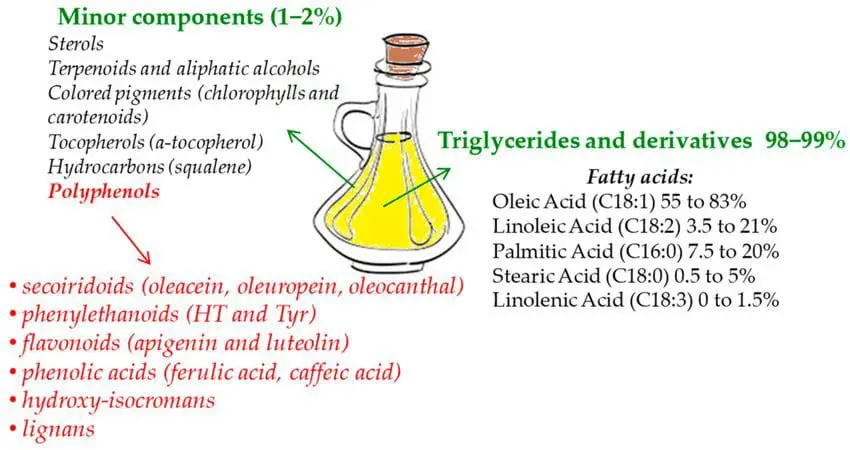
Care sunt ingredientele din uleiul de măsline pur? Principalele componente active ale uleiului de măsline includ acidul oleic, constituenții fenolici și scualenul.
Uleiul de măsline constă în principal din acid oleic (până la 83%), cu cantități mai mici de alți acizi grași, inclusiv acid linoleic (până la 21%) și acid palmitic (până la 20%). Aproximativ 98%–99% din uleiul de măsline extravirgin (fracția saponificabilă) este alcătuit din trigliceride sub formă, în mare parte, de acizi grași monoinsaturați (acid oleic), cantități considerabile de grăsimi polinesaturate (acid linoleic și α-linolenic) și cantități mici de grăsimi saturate (acid palmitic cu 7,5%–20% și acid stearic cu 0,5%–5%).
Constituents / Ingredients
Olive oil is composed mainly of the mixed triglyceride esters of oleic acid, linoleic acid, palmitic acid and of other fatty acids, along with traces of squalene (up to 0,7%) and sterols (about 0,2% phytosterol and tocosterols).
Datorită statutului său de aliment emblematic în dieta mediteraneană (și a Dieta grecească/cretană (în special) și datorită cercetărilor ample asupra compoziției sale unice de fitonutrienți, uleiul de măsline a devenit un ulei culinar legendar, cu beneficii pentru sănătate foarte greu de egalat de alte uleiuri comestibile. Printre lista sa extinsă de fitonutrienți, nicio categorie de nutrienți ai uleiului de măsline nu este mai importantă decât polifenoli. Conținutul de polifenoli al acestui ulei delicios este cu adevărat uimitor!
Uleiul de măsline este foarte bogat în grăsimi mononesaturate și conține o cantitate modestă de vitamine E și K. Uleiul de măsline extravirgin este, de asemenea, plin de antioxidanți, dintre care unii au beneficii puternice pentru sănătate. Fructele de măslin și uleiul de măsline extras prin compresie au o gamă largă de aplicații terapeutice, pe lângă cele culinare, în nutriția umană.
Lista de mai jos prezintă câțiva dintre polifenolii cheie găsiți în uleiul de măsline, organizați în funcție de categoria lor chimică:
Fenoli simpli
Antocianidine
– tyrosol
– cyanidins
– hydroxytyrosol
– peonidins
Terpene
Flavonoli
– oleuropein
– quercetin
– ligstroside
– kaempferol
Flavone
Glicozide flavonoide
– apigenin
– rutină
– luteolin
Lignani
Acizi hidroxicinamici
– pinoresinol
– caffeic acid
Acizi hidroxibenzoici
– cinnamic acid
– vanillic acid
– ferulic acid
– acid siringic
– coumaric acid
Ingredientele uleiului de măsline
Majoritatea polifenolilor din această listă s-au dovedit a funcționa atât ca antioxidanți și, de asemenea, ca antiinflamator nutrienți din organism. Însăși numărul și varietatea polifenolilor din uleiul de măsline ajută la explicarea beneficiilor unice pentru sănătate ale acestui ulei culinar.
Compoziția chimică exactă a uleiului de măsline poate varia în funcție de factori precum soiul de măslin, clima și solul din plantația de măslini, condițiile de creștere, metodele de recoltare și metodele de procesare pentru extragerea uleiului de măsline din fructele de măslin.
ingredients of Extra-virgin Olive Oil – EVOO main components
Nutrient Composition of Olive Oil & comparison with Nutrient Composition of other oils
List of the Nutrient Composition and Ingredients of Extra Virgin Olive Oil and Olive Oil vs. other oils
Nutrient composition of extra virgin olive oil:
Extra virgin olive oil is rich in heart-healthy fats, along with vitamin E and vitamin K.
A tablespoon (about 14 grams) of olive oil contains the following nutrients:
Calories: 119
Saturated fat: 14% of total calories
Monounsaturated fat: 73% of total calories (mostly oleic acid)
Polyunsaturated fat (PUFA): 11% of total calories
Vitamin E: 13% of the Daily Value (DV)
Vitamin K: 7% of the DV
Extra virgin olive oil is a great source of antioxidants, which are compounds that help fight inflammation and chronic disease.
The oil’s main antioxidants include the anti-inflammatory oleocanthal, as well as oleuropein, a substance that protects LDL (bad) cholesterol from oxidation.
Some people have criticized olive oil for having a high omega-6 to omega-3 ratio. However, its total amount of polyunsaturated fats is still relatively low, so you probably don’t need to worry.
In addition to extra virgin olive oil, there are many other popular cooking oils available, including regular olive oil, canola oil, vegetable oil, avocado oil, and coconut oil.
Here is a closer look at how extra virgin olive oil compares to these other types of oils:
Yes, olive oil is gluten-free by nature when we’re talking about the main classes (types) of olive oil (pure olive oil, virgin olive oil, extra virgin olive oil). For all olive oils the only real ingredient in olive oil is the olives fruit extract…
There are two exceptions, situations where you need to be a bit careful: 1) when you are dealing with an infused or flavored olive oil. 2) When olive oil is made in a facility that also produces gluten-containing foods
When olive oil is produced in a shared facility that produces gluten-containing foods, there may be a slight possibility for cross-contamination and although the amount of gluten present in an olive oil would be extremely low in these instances, there could potentially be a concern for someone with celiac disease. Its recommended you look for olive oil that is certified gluten-free, or produced in an allergen-free facility.
Infused/Flavored olive oils, the only time you may really run into trouble is when you’re dealing with smoke-flavored olive oil – whether it’s olive oil or any other cooking oil such as canola oil or vegetable oil. In some “natural smoke flavoring,” the gluten-containing grain barley is used as an ingredient. So, these oils should be avoided unless the oil has a gluten-free certification or you’ve ensured that the manufacturer uses a gluten-free version of smoke flavoring.
Is Olive Oil vegan?
Olive oil is a single-ingredient plant-based food, and beside this, during the olive oil production process, there is no addition of animal-derived products.
So even for the strictest vegans, olive oil is perfectly acceptable. Plus, olive oil is also a great source of nutrient-dense fat, which can sometimes be lacking in poorly formulated vegan diets.
The olive tree, Olea Europaea, is native to the Mediterranean basin and parts of Asia Minor. The fruit and compression-extracted oil have a wide range of therapeutic and culinary applications. Olive oil also constitutes a major component of the “Mediterranean diet.” The chief active components of olive oil include oleic acid, phenolic constituents, and squalene. The main phenolics include hydroxytyrosol, tyrosol, and oleuropein, which occur in highest levels in virgin olive oil and have demonstrated antioxidant activity.
Antioxidants are believed to be responsible for a number of olive oil’s biological activities. Oleic acid, a monounsaturated fatty acid, has shown activity in cancer prevention, while squalene has also been identified as having anticancer effects. Olive oil consumption has benefit for colon and breast cancer prevention.
The oil has been widely studied for its effects on coronary heart disease (CHD), specifically for its ability to reduce blood pressure and low-density lipoprotein (LDL) cholesterol.
Antimicrobial activity of hydroxytyrosol, tyrosol, and oleuropein has been demonstrated against several strains of bacteria implicated in intestinal and respiratory infections.
Although the majority of research has been conducted on the oil, consumption of whole olives might also confer health benefits.
Learn more about the Chemical Characteristics of Olive Oil – Fatty Acids, Trans Fatty Acids, Long Chain Fatty Acids, Percentage of Linolenic Acid allowed in olive oil, “Essential” Fatty Acids, Free Fatty Acids (FFA) and Olive Oil Acidity, Polyphenols (Antioxidants), Peroxides, Pigments and Color, Vitamins, Polycyclic Aromatic Hydrocarbons (PAHs) and more…
An informative video on Olive Oil – check the video for more olive oil chemistry, how to keep fresh, how to best use it to give your food a flavor boost
Suntem o companie de familie cu o vechime de secole (înființată în 1912) care produce ulei de măsline EVOO pe insula CRETA, GRECIA. Uleiul nostru de măsline extravirgin cretan premium și produsele culinare sunt exportate în peste 40 de țări din întreaga lume către o rețea de parteneri atent selecționați. CONTACTAȚI-NE, FII URMĂTORUL NOSTRU PARTENER DE AFACERI VALOAS! pentru Ulei de măsline extravirgin (EVOO) – Ulei de măsline extravirgin organic (Bio) (EVOO organic) – Măsline de masă grecești – Oțet balsamic – Mezeluri, toate din CRETA, GRECIA.
Un nou studiu major despre uleiul de măsline – beneficiile pentru sănătate ale consumului său și ale îmbătrânirii (beneficiile anti-îmbătrânire ale uleiului de măsline) Cercetătorii au descoperit...
Ulei de măsline aromatizat și ulei de măsline infuzat - care sunt diferențele? Termenii ulei de măsline aromatizat și ulei de măsline infuzat sunt adesea folosiți...
Ierburile și substanțele aromatice infuzate în uleiul de măsline extravirgin schimbă piața uleiului de măsline. Uleiurile aromate au o istorie lungă, civilizațiile antice folosind...
Care sunt prețurile uleiului de măsline în 2025? De ce costul de cumpărare a uleiului de măsline extravirgin este aproape înjumătățit anul acesta în unele țări? Europa...
Eveniment informativ pentru promovarea plantației tradiționale de măslini cretane Eveniment informativ pentru promovarea plantației tradiționale de măslini...
Ulei de măsline - Proprietăți organoleptice: Uleiul de măsline nu este doar o grăsime sănătoasă, ci și un produs complex și aromat. Proprietățile organoleptice...
Ce sunt polifenolii? Alimente bogate în polifenoli – Polifenolii din uleiul de măsline – Beneficii pentru sănătate ale polifenolilor Compuși polifenolici...
Este uleiul de măsline (în special uleiul de măsline extravirgin) bun pentru nutriția copiilor? Uleiul de măsline extravirgin (EVOO) este o sursă importantă de nutriție...
21 de soiuri de măsline de masă grecești se clasează printre cele mai bune din lume. 21 dintre cele mai bune 50 de măsline de masă din lume sunt produse în Grecia - 8...


 Ulei de măsline en-gros – Furnizori și distribuitori en-gros de ulei de măsline