Olive Oil Ingredients – composition of the Olive Oil
The Olive Oil Ingredients
Learn more about the Chemical Characteristics of Olive Oil – Fatty Acids, Trans Fatty Acids, Long Chain Fatty Acids, Percentage of Linolenic Acid allowed in olive oil, “Essential” Fatty Acids, Free Fatty Acids (FFA) and Olive Oil Acidity, Polyphenols (Antioxidants), Peroxides, Pigments and Color, Vitamins, Polycyclic Aromatic Hydrocarbons (PAHs) and more…
An informative video on Olive Oil – check the video for more olive oil chemistry, how to keep fresh, how to best use it to give your food a flavor boost
Kami adalah perusahaan keluarga yang telah berdiri selama berabad-abad (berdiri sejak 1912) dalam produksi Minyak Zaitun Extra Virgin (EVOO) di pulau Kreta, Yunani. Minyak zaitun extra virgin Kreta premium dan produk makanan kuliner kami diekspor ke lebih dari 40 negara di seluruh dunia melalui jaringan mitra yang dipilih dengan cermat. HUBUNGI KAMI, JADI MITRA BISNIS KAMI YANG BERHARGA! untuk Minyak Zaitun Extra Virgin (EVOO) – Minyak Zaitun Extra Virgin Organik (Bio) (EVOO Organik) – Zaitun Meja Yunani – Cuka Balsamik – Makanan Delik, semuanya dari Kreta, Yunani.
Most of the polyphenols in this list have been shown to function both as antioksidan and also as anti-inflammatory nutrients in the body. The very number and variety of polyphenols in olive oil helps explain the unique health benefits of this culinary oil.
The exact chemical composition of olive oil can vary depending on factors like the olive variety, climate and soil of the olive grove, growing conditions, harvesting methods and processing methods for the extraction of olive oil from the olive fruit.
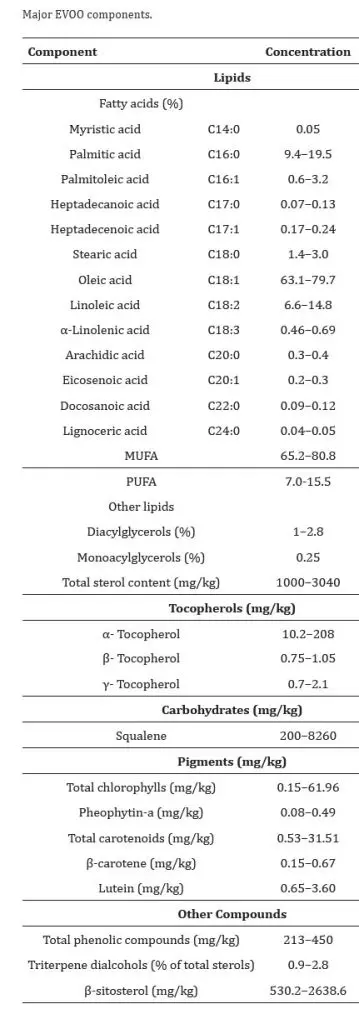
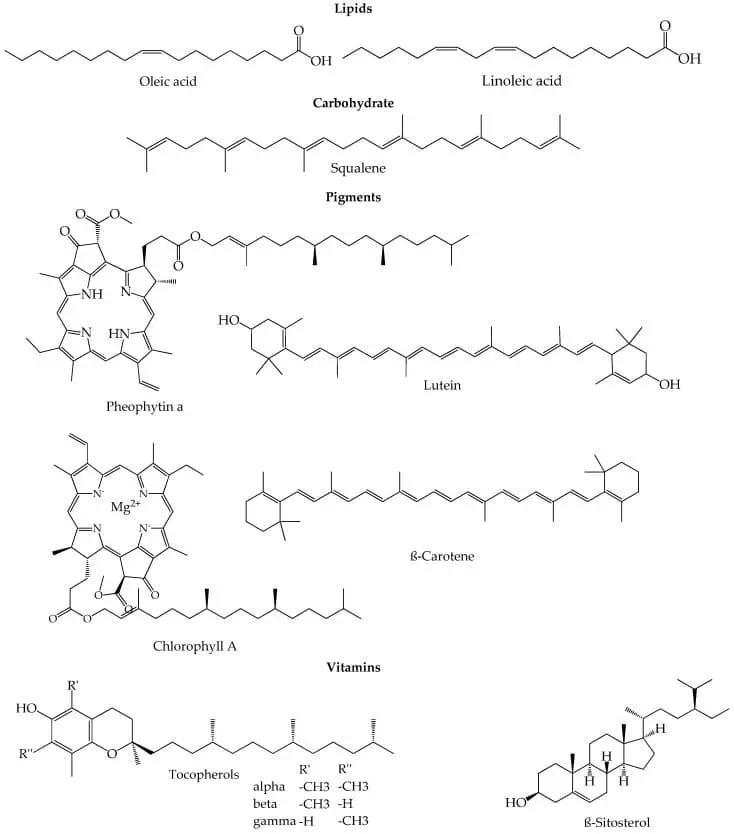
ingredients of Extra-virgin Olive Oil – EVOO main components
Nutrient Composition of Olive Oil & comparison with Nutrient Composition of other oils
List of the Nutrient Composition and Ingredients of Extra Virgin Olive Oil and Olive Oil vs. other oils
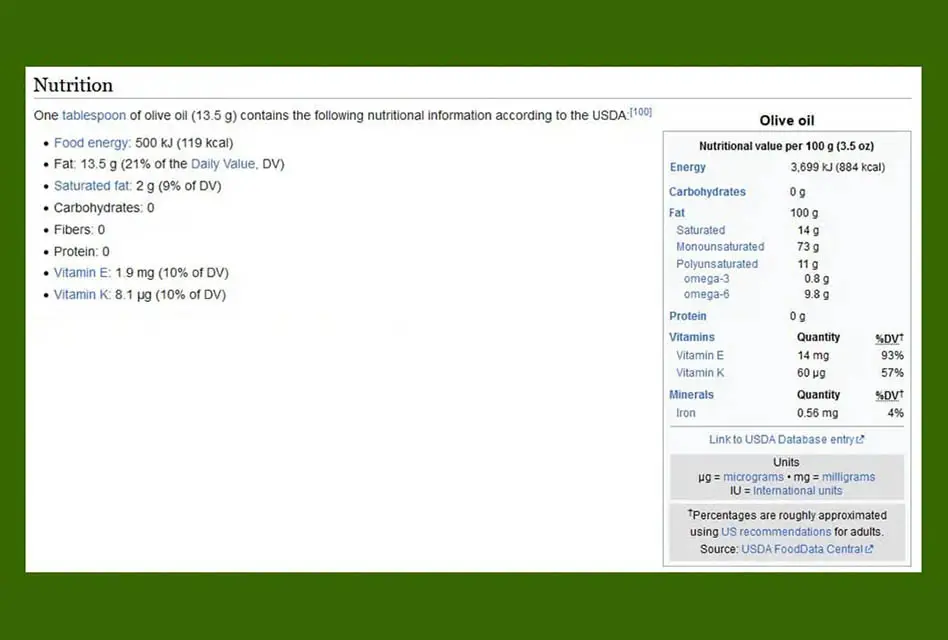
Nutrient composition of extra virgin olive oil:
Extra virgin olive oil is rich in heart-healthy fats, along with vitamin E and vitamin K.
A tablespoon (about 14 grams) of olive oil contains the following nutrients:
Calories: 119
Saturated fat: 14% of total calories
Monounsaturated fat: 73% of total calories (mostly oleic acid)
Polyunsaturated fat (PUFA): 11% of total calories
Vitamin E: 13% of the Daily Value (DV)
Vitamin K: 7% of the DV
Extra virgin olive oil is a great source of antioxidants, which are compounds that help fight inflammation and chronic disease.
The oil’s main antioxidants include the anti-inflammatory oleocanthal, as well as oleuropein, a substance that protects LDL (bad) cholesterol from oxidation.
Some people have criticized olive oil for having a high omega-6 to omega-3 ratio. However, its total amount of polyunsaturated fats is still relatively low, so you probably don’t need to worry.
In addition to extra virgin olive oil, there are many other popular cooking oils available, including regular olive oil, canola oil, vegetable oil, avocado oil, and coconut oil.
Here is a closer look at how extra virgin olive oil compares to these other types of oils:
Yes, olive oil is gluten-free by nature when we’re talking about the main classes (types) of olive oil (pure olive oil, virgin olive oil, extra virgin olive oil). For all olive oils the only real ingredient in olive oil is the olives fruit extract…
There are two exceptions, situations where you need to be a bit careful: 1) when you are dealing with an infused or flavored olive oil. 2) When olive oil is made in a facility that also produces gluten-containing foods
When olive oil is produced in a shared facility that produces gluten-containing foods, there may be a slight possibility for cross-contamination and although the amount of gluten present in an olive oil would be extremely low in these instances, there could potentially be a concern for someone with celiac disease. Its recommended you look for olive oil that is certified gluten-free, or produced in an allergen-free facility.
Infused/Flavored olive oils, the only time you may really run into trouble is when you’re dealing with smoke-flavored olive oil – whether it’s olive oil or any other cooking oil such as canola oil or vegetable oil. In some “natural smoke flavoring,” the gluten-containing grain barley is used as an ingredient. So, these oils should be avoided unless the oil has a gluten-free certification or you’ve ensured that the manufacturer uses a gluten-free version of smoke flavoring.
Is Olive Oil vegan?
Olive oil is a single-ingredient plant-based food, and beside this, during the olive oil production process, there is no addition of animal-derived products.
So even for the strictest vegans, olive oil is perfectly acceptable. Plus, olive oil is also a great source of nutrient-dense fat, which can sometimes be lacking in poorly formulated vegan diets.
The olive tree, Olea Europaea, is native to the Mediterranean basin and parts of Asia Minor. The fruit and compression-extracted oil have a wide range of therapeutic and culinary applications. Olive oil also constitutes a major component of the “Mediterranean diet.” The chief active components of olive oil include oleic acid, phenolic constituents, and squalene. The main phenolics include hydroxytyrosol, tyrosol, and oleuropein, which occur in highest levels in virgin olive oil and have demonstrated antioxidant activity.
Antioxidants are believed to be responsible for a number of olive oil’s biological activities. Oleic acid, a monounsaturated fatty acid, has shown activity in cancer prevention, while squalene has also been identified as having anticancer effects. Olive oil consumption has benefit for colon and breast cancer prevention.
The oil has been widely studied for its effects on coronary heart disease (CHD), specifically for its ability to reduce blood pressure and low-density lipoprotein (LDL) cholesterol.
Antimicrobial activity of hydroxytyrosol, tyrosol, and oleuropein has been demonstrated against several strains of bacteria implicated in intestinal and respiratory infections.
Although the majority of research has been conducted on the oil, consumption of whole olives might also confer health benefits.
Learn more about the Chemical Characteristics of Olive Oil – Fatty Acids, Trans Fatty Acids, Long Chain Fatty Acids, Percentage of Linolenic Acid allowed in olive oil, “Essential” Fatty Acids, Free Fatty Acids (FFA) and Olive Oil Acidity, Polyphenols (Antioxidants), Peroxides, Pigments and Color, Vitamins, Polycyclic Aromatic Hydrocarbons (PAHs) and more…
An informative video on Olive Oil – check the video for more olive oil chemistry, how to keep fresh, how to best use it to give your food a flavor boost
Kami adalah perusahaan keluarga yang telah berdiri selama berabad-abad (berdiri sejak 1912) dalam produksi Minyak Zaitun Extra Virgin (EVOO) di pulau Kreta, Yunani. Minyak zaitun extra virgin Kreta premium dan produk makanan kuliner kami diekspor ke lebih dari 40 negara di seluruh dunia melalui jaringan mitra yang dipilih dengan cermat. HUBUNGI KAMI, JADI MITRA BISNIS KAMI YANG BERHARGA! untuk Minyak Zaitun Extra Virgin (EVOO) – Minyak Zaitun Extra Virgin Organik (Bio) (EVOO Organik) – Zaitun Meja Yunani – Cuka Balsamik – Makanan Delik, semuanya dari Kreta, Yunani.
The list below shows some of the key polyphenols found in olive oil, organized by their chemical category:
Fenol Sederhana
Antosianidin
– tyrosol
– cyanidins
– hydroxytyrosol
– peonidins
Terpena
Flavonol
– oleuropein
– quercetin
– ligstroside
– kaempferol
Flavonoid
Glikosida flavonoid
– apigenin
– rutin
– luteolin
Lignan
Asam hidroksisinamat
– pinoresinol
– caffeic acid
Asam hidroksibenzoat
– cinnamic acid
– vanillic acid
– ferulic acid
– syringic acid
– coumaric acid
Olive Oil Ingredients
Most of the polyphenols in this list have been shown to function both as antioksidan and also as anti-inflammatory nutrients in the body. The very number and variety of polyphenols in olive oil helps explain the unique health benefits of this culinary oil.
The exact chemical composition of olive oil can vary depending on factors like the olive variety, climate and soil of the olive grove, growing conditions, harvesting methods and processing methods for the extraction of olive oil from the olive fruit.
ingredients of Extra-virgin Olive Oil – EVOO main components
Nutrient Composition of Olive Oil & comparison with Nutrient Composition of other oils
List of the Nutrient Composition and Ingredients of Extra Virgin Olive Oil and Olive Oil vs. other oils
Nutrient composition of extra virgin olive oil:
Extra virgin olive oil is rich in heart-healthy fats, along with vitamin E and vitamin K.
A tablespoon (about 14 grams) of olive oil contains the following nutrients:
Calories: 119
Saturated fat: 14% of total calories
Monounsaturated fat: 73% of total calories (mostly oleic acid)
Polyunsaturated fat (PUFA): 11% of total calories
Vitamin E: 13% of the Daily Value (DV)
Vitamin K: 7% of the DV
Extra virgin olive oil is a great source of antioxidants, which are compounds that help fight inflammation and chronic disease.
The oil’s main antioxidants include the anti-inflammatory oleocanthal, as well as oleuropein, a substance that protects LDL (bad) cholesterol from oxidation.
Some people have criticized olive oil for having a high omega-6 to omega-3 ratio. However, its total amount of polyunsaturated fats is still relatively low, so you probably don’t need to worry.
In addition to extra virgin olive oil, there are many other popular cooking oils available, including regular olive oil, canola oil, vegetable oil, avocado oil, and coconut oil.
Here is a closer look at how extra virgin olive oil compares to these other types of oils:
Yes, olive oil is gluten-free by nature when we’re talking about the main classes (types) of olive oil (pure olive oil, virgin olive oil, extra virgin olive oil). For all olive oils the only real ingredient in olive oil is the olives fruit extract…
There are two exceptions, situations where you need to be a bit careful: 1) when you are dealing with an infused or flavored olive oil. 2) When olive oil is made in a facility that also produces gluten-containing foods
When olive oil is produced in a shared facility that produces gluten-containing foods, there may be a slight possibility for cross-contamination and although the amount of gluten present in an olive oil would be extremely low in these instances, there could potentially be a concern for someone with celiac disease. Its recommended you look for olive oil that is certified gluten-free, or produced in an allergen-free facility.
Infused/Flavored olive oils, the only time you may really run into trouble is when you’re dealing with smoke-flavored olive oil – whether it’s olive oil or any other cooking oil such as canola oil or vegetable oil. In some “natural smoke flavoring,” the gluten-containing grain barley is used as an ingredient. So, these oils should be avoided unless the oil has a gluten-free certification or you’ve ensured that the manufacturer uses a gluten-free version of smoke flavoring.
Is Olive Oil vegan?
Olive oil is a single-ingredient plant-based food, and beside this, during the olive oil production process, there is no addition of animal-derived products.
So even for the strictest vegans, olive oil is perfectly acceptable. Plus, olive oil is also a great source of nutrient-dense fat, which can sometimes be lacking in poorly formulated vegan diets.
The olive tree, Olea Europaea, is native to the Mediterranean basin and parts of Asia Minor. The fruit and compression-extracted oil have a wide range of therapeutic and culinary applications. Olive oil also constitutes a major component of the “Mediterranean diet.” The chief active components of olive oil include oleic acid, phenolic constituents, and squalene. The main phenolics include hydroxytyrosol, tyrosol, and oleuropein, which occur in highest levels in virgin olive oil and have demonstrated antioxidant activity.
Antioxidants are believed to be responsible for a number of olive oil’s biological activities. Oleic acid, a monounsaturated fatty acid, has shown activity in cancer prevention, while squalene has also been identified as having anticancer effects. Olive oil consumption has benefit for colon and breast cancer prevention.
The oil has been widely studied for its effects on coronary heart disease (CHD), specifically for its ability to reduce blood pressure and low-density lipoprotein (LDL) cholesterol.
Antimicrobial activity of hydroxytyrosol, tyrosol, and oleuropein has been demonstrated against several strains of bacteria implicated in intestinal and respiratory infections.
Although the majority of research has been conducted on the oil, consumption of whole olives might also confer health benefits.
Learn more about the Chemical Characteristics of Olive Oil – Fatty Acids, Trans Fatty Acids, Long Chain Fatty Acids, Percentage of Linolenic Acid allowed in olive oil, “Essential” Fatty Acids, Free Fatty Acids (FFA) and Olive Oil Acidity, Polyphenols (Antioxidants), Peroxides, Pigments and Color, Vitamins, Polycyclic Aromatic Hydrocarbons (PAHs) and more…
An informative video on Olive Oil – check the video for more olive oil chemistry, how to keep fresh, how to best use it to give your food a flavor boost
Kami adalah perusahaan keluarga yang telah berdiri selama berabad-abad (berdiri sejak 1912) dalam produksi Minyak Zaitun Extra Virgin (EVOO) di pulau Kreta, Yunani. Minyak zaitun extra virgin Kreta premium dan produk makanan kuliner kami diekspor ke lebih dari 40 negara di seluruh dunia melalui jaringan mitra yang dipilih dengan cermat. HUBUNGI KAMI, JADI MITRA BISNIS KAMI YANG BERHARGA! untuk Minyak Zaitun Extra Virgin (EVOO) – Minyak Zaitun Extra Virgin Organik (Bio) (EVOO Organik) – Zaitun Meja Yunani – Cuka Balsamik – Makanan Delik, semuanya dari Kreta, Yunani.
What are the ingredients in pure olive oil? The chief active components of olive oil include oleic acid, phenolic constituents, and squalene.
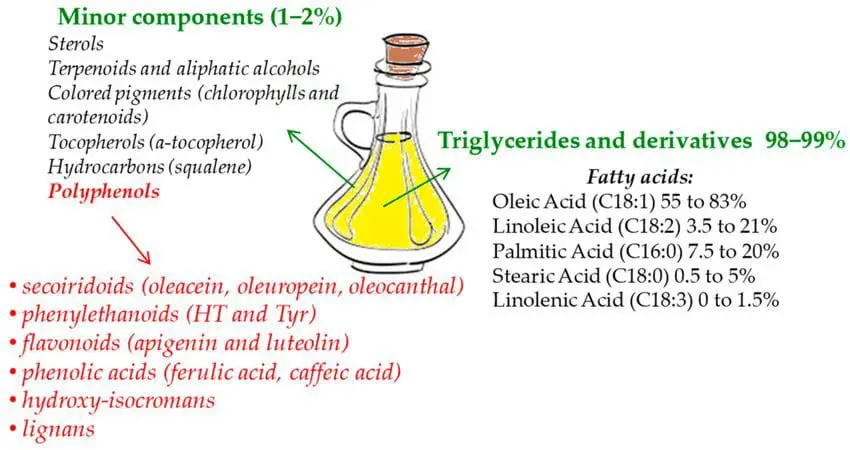
Olive oil consists mainly of oleic acid (up to 83%), with smaller amounts of other fatty acids including linoleic acid (up to 21%) and palmitic acid (up to 20%). Approximately, 98%–99% of EVOO – Extra Virgin Olive Oil (the saponifiable fraction) is made up of triglycerides in the form of mostly MUFAs (oleic acid), considerable amounts of polyunsaturated fats (linoleic and α-linolenic), and small amounts of saturated fats (palmitic by 7,5%–20% and stearic acid by 0,5%–5%).
Constituents / Ingredients
Olive oil is composed mainly of the mixed triglyceride esters of oleic acid, linoleic acid, palmitic acid and of other fatty acids, along with traces of squalene (up to 0,7%) and sterols (about 0,2% phytosterol and tocosterols).
Thanks to its status as a spotlight food in the Mediterranean Diet (and the Greek / Cretan Diet in particular), and thanks to extensive research on its unique phytonutrient composition, olive oil has become a legendary culinary oil with very difficult-to-match health benefits by other edible oils. Among its extensive list of phytonutrients, no single category of nutrients of olive oil is more important than its polifenol. The polyphenol content of this delicious oil is truly amazing!
Olive oil is very high in monounsaturated fats and contains a modest amount of vitamins E and K. Extra virgin olive oil is also loaded with antioxidants, some of which have powerful health benefits. The olive fruit and compression-extracted olive oil have a wide range of therapeutic beside the culinary applications in human nutrition.
The list below shows some of the key polyphenols found in olive oil, organized by their chemical category:
Fenol Sederhana
Antosianidin
– tyrosol
– cyanidins
– hydroxytyrosol
– peonidins
Terpena
Flavonol
– oleuropein
– quercetin
– ligstroside
– kaempferol
Flavonoid
Glikosida flavonoid
– apigenin
– rutin
– luteolin
Lignan
Asam hidroksisinamat
– pinoresinol
– caffeic acid
Asam hidroksibenzoat
– cinnamic acid
– vanillic acid
– ferulic acid
– syringic acid
– coumaric acid
Olive Oil Ingredients
Most of the polyphenols in this list have been shown to function both as antioksidan and also as anti-inflammatory nutrients in the body. The very number and variety of polyphenols in olive oil helps explain the unique health benefits of this culinary oil.
The exact chemical composition of olive oil can vary depending on factors like the olive variety, climate and soil of the olive grove, growing conditions, harvesting methods and processing methods for the extraction of olive oil from the olive fruit.
ingredients of Extra-virgin Olive Oil – EVOO main components
Nutrient Composition of Olive Oil & comparison with Nutrient Composition of other oils
List of the Nutrient Composition and Ingredients of Extra Virgin Olive Oil and Olive Oil vs. other oils
Nutrient composition of extra virgin olive oil:
Extra virgin olive oil is rich in heart-healthy fats, along with vitamin E and vitamin K.
A tablespoon (about 14 grams) of olive oil contains the following nutrients:
Calories: 119
Saturated fat: 14% of total calories
Monounsaturated fat: 73% of total calories (mostly oleic acid)
Polyunsaturated fat (PUFA): 11% of total calories
Vitamin E: 13% of the Daily Value (DV)
Vitamin K: 7% of the DV
Extra virgin olive oil is a great source of antioxidants, which are compounds that help fight inflammation and chronic disease.
The oil’s main antioxidants include the anti-inflammatory oleocanthal, as well as oleuropein, a substance that protects LDL (bad) cholesterol from oxidation.
Some people have criticized olive oil for having a high omega-6 to omega-3 ratio. However, its total amount of polyunsaturated fats is still relatively low, so you probably don’t need to worry.
In addition to extra virgin olive oil, there are many other popular cooking oils available, including regular olive oil, canola oil, vegetable oil, avocado oil, and coconut oil.
Here is a closer look at how extra virgin olive oil compares to these other types of oils:
Yes, olive oil is gluten-free by nature when we’re talking about the main classes (types) of olive oil (pure olive oil, virgin olive oil, extra virgin olive oil). For all olive oils the only real ingredient in olive oil is the olives fruit extract…
There are two exceptions, situations where you need to be a bit careful: 1) when you are dealing with an infused or flavored olive oil. 2) When olive oil is made in a facility that also produces gluten-containing foods
When olive oil is produced in a shared facility that produces gluten-containing foods, there may be a slight possibility for cross-contamination and although the amount of gluten present in an olive oil would be extremely low in these instances, there could potentially be a concern for someone with celiac disease. Its recommended you look for olive oil that is certified gluten-free, or produced in an allergen-free facility.
Infused/Flavored olive oils, the only time you may really run into trouble is when you’re dealing with smoke-flavored olive oil – whether it’s olive oil or any other cooking oil such as canola oil or vegetable oil. In some “natural smoke flavoring,” the gluten-containing grain barley is used as an ingredient. So, these oils should be avoided unless the oil has a gluten-free certification or you’ve ensured that the manufacturer uses a gluten-free version of smoke flavoring.
Is Olive Oil vegan?
Olive oil is a single-ingredient plant-based food, and beside this, during the olive oil production process, there is no addition of animal-derived products.
So even for the strictest vegans, olive oil is perfectly acceptable. Plus, olive oil is also a great source of nutrient-dense fat, which can sometimes be lacking in poorly formulated vegan diets.
The olive tree, Olea Europaea, is native to the Mediterranean basin and parts of Asia Minor. The fruit and compression-extracted oil have a wide range of therapeutic and culinary applications. Olive oil also constitutes a major component of the “Mediterranean diet.” The chief active components of olive oil include oleic acid, phenolic constituents, and squalene. The main phenolics include hydroxytyrosol, tyrosol, and oleuropein, which occur in highest levels in virgin olive oil and have demonstrated antioxidant activity.
Antioxidants are believed to be responsible for a number of olive oil’s biological activities. Oleic acid, a monounsaturated fatty acid, has shown activity in cancer prevention, while squalene has also been identified as having anticancer effects. Olive oil consumption has benefit for colon and breast cancer prevention.
The oil has been widely studied for its effects on coronary heart disease (CHD), specifically for its ability to reduce blood pressure and low-density lipoprotein (LDL) cholesterol.
Antimicrobial activity of hydroxytyrosol, tyrosol, and oleuropein has been demonstrated against several strains of bacteria implicated in intestinal and respiratory infections.
Although the majority of research has been conducted on the oil, consumption of whole olives might also confer health benefits.
Learn more about the Chemical Characteristics of Olive Oil – Fatty Acids, Trans Fatty Acids, Long Chain Fatty Acids, Percentage of Linolenic Acid allowed in olive oil, “Essential” Fatty Acids, Free Fatty Acids (FFA) and Olive Oil Acidity, Polyphenols (Antioxidants), Peroxides, Pigments and Color, Vitamins, Polycyclic Aromatic Hydrocarbons (PAHs) and more…
An informative video on Olive Oil – check the video for more olive oil chemistry, how to keep fresh, how to best use it to give your food a flavor boost
Kami adalah perusahaan keluarga yang telah berdiri selama berabad-abad (berdiri sejak 1912) dalam produksi Minyak Zaitun Extra Virgin (EVOO) di pulau Kreta, Yunani. Minyak zaitun extra virgin Kreta premium dan produk makanan kuliner kami diekspor ke lebih dari 40 negara di seluruh dunia melalui jaringan mitra yang dipilih dengan cermat. HUBUNGI KAMI, JADI MITRA BISNIS KAMI YANG BERHARGA! untuk Minyak Zaitun Extra Virgin (EVOO) – Minyak Zaitun Extra Virgin Organik (Bio) (EVOO Organik) – Zaitun Meja Yunani – Cuka Balsamik – Makanan Delik, semuanya dari Kreta, Yunani.
Studi besar terbaru tentang minyak zaitun – manfaat kesehatan dari konsumsinya dan penuaan (manfaat kesehatan anti-penuaan dari minyak zaitun) Para peneliti menemukan...
Rempah-rempah dan Aromatik yang Dicampurkan ke dalam Minyak Zaitun Extra Virgin Mengubah Pasar Minyak Zaitun Berperisa Minyak zaitun beraroma memiliki sejarah panjang, dengan peradaban kuno yang menggunakannya...
Berapakah harga minyak zaitun pada tahun 2025? Mengapa biaya pembelian minyak zaitun extra virgin hampir turun setengahnya tahun ini di beberapa negara? Eropa...
Perusahaan kami akan berpartisipasi dalam ''Foodexpo Greece 2025'', yang akan berlangsung di Athena di Metropolitan Expo Center pada tanggal 08-10 Maret 20...
Apakah Minyak Zaitun (Terutama Minyak Zaitun Extra Virgin) Baik untuk Nutrisi Anak? Minyak zaitun extra virgin (EVOO) adalah sumber nutrisi yang kaya...
Kepada Mitra yang Terhormat, kami ingin memberitahukan bahwa perusahaan kami akan tutup untuk liburan musim panas antara tanggal 12/08 - 26/08 CRITIDA Bio Creta...


 Grosir Minyak Zaitun – Pemasok & Distributor Grosir Minyak Zaitun