Olive Oil Ingredients – composition of the Olive Oil
The Olive Oil Ingredients
Learn more about the Chemical Characteristics of Olive Oil – Fatty Acids, Trans Fatty Acids, Long Chain Fatty Acids, Percentage of Linolenic Acid allowed in olive oil, “Essential” Fatty Acids, Free Fatty Acids (FFA) and Olive Oil Acidity, Polyphenols (Antioxidants), Peroxides, Pigments and Color, Vitamins, Polycyclic Aromatic Hydrocarbons (PAHs) and more…
An informative video on Olive Oil – check the video for more olive oil chemistry, how to keep fresh, how to best use it to give your food a flavor boost
Vi er en århundreder lang familieejet virksomhed (est. 1912) inden for produktion af EVOO olivenolie på øen KRETA i GRÆKENLAND. Vores premium kretensiske ekstra jomfruolivenolie og kulinariske fødevarer eksporteres i over 40 lande verden over til et omhyggeligt udvalgt netværk af partnere. KONTAKT OS, BLIV VORES NÆSTE VÆRDIFULDE FORRETNINGSPARTNER! for ekstra jomfruolivenolie (EVOO) – Økologisk (Bio) ekstra jomfruolivenolie (Økologisk EVOO) – Græske spiseoliven – Balsamicoeddike – Delikatesser, alt fra KRETA GRÆKENLAND.
De fleste polyfenoler på denne liste har vist sig at fungere både som antioxidanter og også som antiinflammatorisk næringsstoffer i kroppen. Selve antallet og variationen af polyfenoler i olivenolie er med til at forklare de unikke sundhedsmæssige fordele ved denne kulinariske olie.
Den nøjagtige kemiske sammensætning af olivenolie kan variere afhængigt af faktorer som olivensorten, klimaet og jordbunden i olivenlunden, vækstbetingelser, høstmetoder og forarbejdningsmetoder til udvinding af olivenolie fra olivenfrugten.
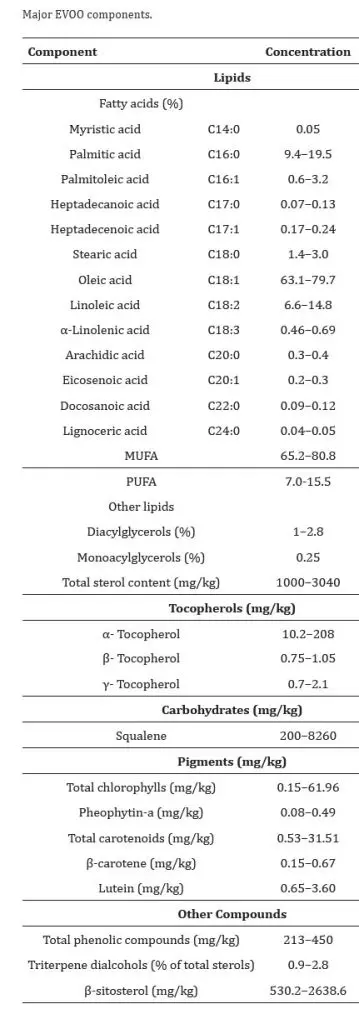
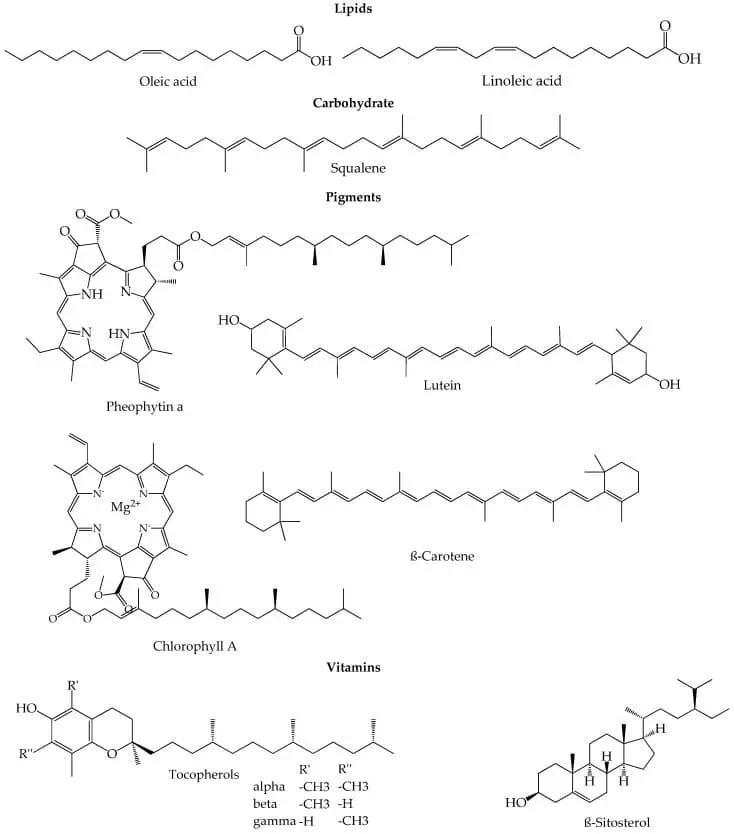
ingredients of Extra-virgin Olive Oil – EVOO main components
Nutrient Composition of Olive Oil & comparison with Nutrient Composition of other oils
List of the Nutrient Composition and Ingredients of Extra Virgin Olive Oil and Olive Oil vs. other oils
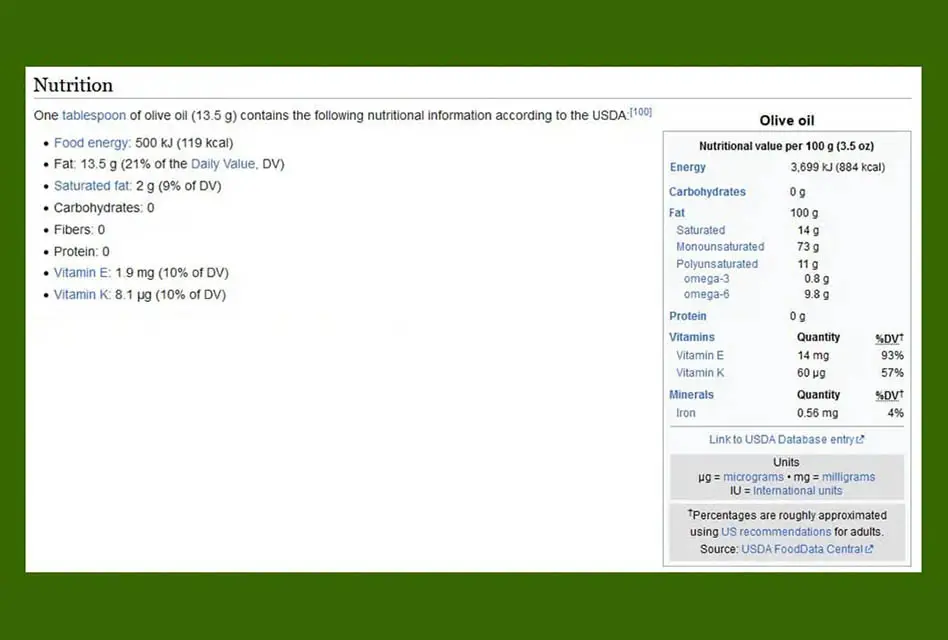
Nutrient composition of extra virgin olive oil:
Extra virgin olive oil is rich in heart-healthy fats, along with vitamin E and vitamin K.
A tablespoon (about 14 grams) of olive oil contains the following nutrients:
Calories: 119
Saturated fat: 14% of total calories
Monounsaturated fat: 73% of total calories (mostly oleic acid)
Polyunsaturated fat (PUFA): 11% of total calories
Vitamin E: 13% of the Daily Value (DV)
Vitamin K: 7% of the DV
Extra virgin olive oil is a great source of antioxidants, which are compounds that help fight inflammation and chronic disease.
The oil’s main antioxidants include the anti-inflammatory oleocanthal, as well as oleuropein, a substance that protects LDL (bad) cholesterol from oxidation.
Some people have criticized olive oil for having a high omega-6 to omega-3 ratio. However, its total amount of polyunsaturated fats is still relatively low, so you probably don’t need to worry.
In addition to extra virgin olive oil, there are many other popular cooking oils available, including regular olive oil, canola oil, vegetable oil, avocado oil, and coconut oil.
Here is a closer look at how extra virgin olive oil compares to these other types of oils:
Yes, olive oil is gluten-free by nature when we’re talking about the main classes (types) of olive oil (pure olive oil, virgin olive oil, extra virgin olive oil). For all olive oils the only real ingredient in olive oil is the olives fruit extract…
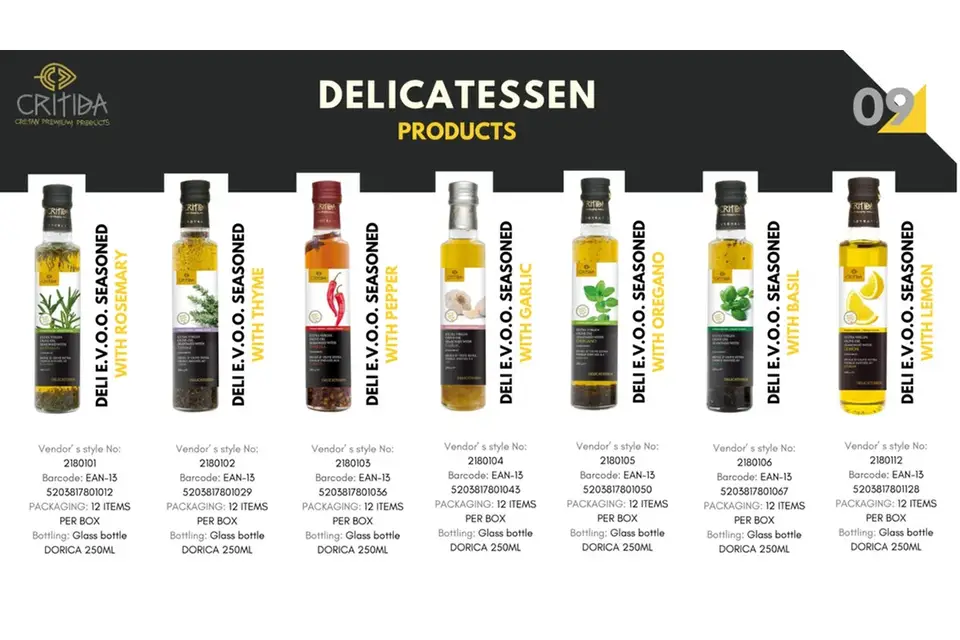
There are two exceptions, situations where you need to be a bit careful: 1) when you are dealing with an infused or flavored olive oil. 2) When olive oil is made in a facility that also produces gluten-containing foods
When olive oil is produced in a shared facility that produces gluten-containing foods, there may be a slight possibility for cross-contamination and although the amount of gluten present in an olive oil would be extremely low in these instances, there could potentially be a concern for someone with celiac disease. Its recommended you look for olive oil that is certified gluten-free, or produced in an allergen-free facility.
Infused/Flavored olive oils, the only time you may really run into trouble is when you’re dealing with smoke-flavored olive oil – whether it’s olive oil or any other cooking oil such as canola oil or vegetable oil. In some “natural smoke flavoring,” the gluten-containing grain barley is used as an ingredient. So, these oils should be avoided unless the oil has a gluten-free certification or you’ve ensured that the manufacturer uses a gluten-free version of smoke flavoring.
Is Olive Oil vegan?
Olive oil is a single-ingredient plant-based food, and beside this, during the olive oil production process, there is no addition of animal-derived products.
So even for the strictest vegans, olive oil is perfectly acceptable. Plus, olive oil is also a great source of nutrient-dense fat, which can sometimes be lacking in poorly formulated vegan diets.
The olive tree, Olea Europaea, is native to the Mediterranean basin and parts of Asia Minor. The fruit and compression-extracted oil have a wide range of therapeutic and culinary applications. Olive oil also constitutes a major component of the “Mediterranean diet.” The chief active components of olive oil include oleic acid, phenolic constituents, and squalene. The main phenolics include hydroxytyrosol, tyrosol, and oleuropein, which occur in highest levels in virgin olive oil and have demonstrated antioxidant activity.
Antioxidants are believed to be responsible for a number of olive oil’s biological activities. Oleic acid, a monounsaturated fatty acid, has shown activity in cancer prevention, while squalene has also been identified as having anticancer effects. Olive oil consumption has benefit for colon and breast cancer prevention.
The oil has been widely studied for its effects on coronary heart disease (CHD), specifically for its ability to reduce blood pressure and low-density lipoprotein (LDL) cholesterol.
Antimicrobial activity of hydroxytyrosol, tyrosol, and oleuropein has been demonstrated against several strains of bacteria implicated in intestinal and respiratory infections.
Although the majority of research has been conducted on the oil, consumption of whole olives might also confer health benefits.
Learn more about the Chemical Characteristics of Olive Oil – Fatty Acids, Trans Fatty Acids, Long Chain Fatty Acids, Percentage of Linolenic Acid allowed in olive oil, “Essential” Fatty Acids, Free Fatty Acids (FFA) and Olive Oil Acidity, Polyphenols (Antioxidants), Peroxides, Pigments and Color, Vitamins, Polycyclic Aromatic Hydrocarbons (PAHs) and more…
An informative video on Olive Oil – check the video for more olive oil chemistry, how to keep fresh, how to best use it to give your food a flavor boost
Vi er en århundreder lang familieejet virksomhed (est. 1912) inden for produktion af EVOO olivenolie på øen KRETA i GRÆKENLAND. Vores premium kretensiske ekstra jomfruolivenolie og kulinariske fødevarer eksporteres i over 40 lande verden over til et omhyggeligt udvalgt netværk af partnere. KONTAKT OS, BLIV VORES NÆSTE VÆRDIFULDE FORRETNINGSPARTNER! for ekstra jomfruolivenolie (EVOO) – Økologisk (Bio) ekstra jomfruolivenolie (Økologisk EVOO) – Græske spiseoliven – Balsamicoeddike – Delikatesser, alt fra KRETA GRÆKENLAND.
Listen nedenfor viser nogle af de vigtigste polyfenoler, der findes i olivenolie, organiseret efter deres kemiske kategori:
Simple fenoler
Anthocyanidiner
– tyrosol
– cyanidins
– hydroxytyrosol
– peonidins
Terpener
Flavonoler
– oleuropein
– quercetin
– ligstroside
– kaempferol
Flavoner
Flavonoidglykosider
– apigenin
– rutine
– luteolin
Lignaner
Hydroxykanelsyrer
– pinoresinol
– caffeic acid
Hydroxybenzoesyrer
– cinnamic acid
– vanillic acid
– ferulic acid
– sprøjtesyre
– coumaric acid
Ingredienser i olivenolie
De fleste polyfenoler på denne liste har vist sig at fungere både som antioxidanter og også som antiinflammatorisk næringsstoffer i kroppen. Selve antallet og variationen af polyfenoler i olivenolie er med til at forklare de unikke sundhedsmæssige fordele ved denne kulinariske olie.
Den nøjagtige kemiske sammensætning af olivenolie kan variere afhængigt af faktorer som olivensorten, klimaet og jordbunden i olivenlunden, vækstbetingelser, høstmetoder og forarbejdningsmetoder til udvinding af olivenolie fra olivenfrugten.
ingredients of Extra-virgin Olive Oil – EVOO main components
Nutrient Composition of Olive Oil & comparison with Nutrient Composition of other oils
List of the Nutrient Composition and Ingredients of Extra Virgin Olive Oil and Olive Oil vs. other oils
Nutrient composition of extra virgin olive oil:
Extra virgin olive oil is rich in heart-healthy fats, along with vitamin E and vitamin K.
A tablespoon (about 14 grams) of olive oil contains the following nutrients:
Calories: 119
Saturated fat: 14% of total calories
Monounsaturated fat: 73% of total calories (mostly oleic acid)
Polyunsaturated fat (PUFA): 11% of total calories
Vitamin E: 13% of the Daily Value (DV)
Vitamin K: 7% of the DV
Extra virgin olive oil is a great source of antioxidants, which are compounds that help fight inflammation and chronic disease.
The oil’s main antioxidants include the anti-inflammatory oleocanthal, as well as oleuropein, a substance that protects LDL (bad) cholesterol from oxidation.
Some people have criticized olive oil for having a high omega-6 to omega-3 ratio. However, its total amount of polyunsaturated fats is still relatively low, so you probably don’t need to worry.
In addition to extra virgin olive oil, there are many other popular cooking oils available, including regular olive oil, canola oil, vegetable oil, avocado oil, and coconut oil.
Here is a closer look at how extra virgin olive oil compares to these other types of oils:
Yes, olive oil is gluten-free by nature when we’re talking about the main classes (types) of olive oil (pure olive oil, virgin olive oil, extra virgin olive oil). For all olive oils the only real ingredient in olive oil is the olives fruit extract…
There are two exceptions, situations where you need to be a bit careful: 1) when you are dealing with an infused or flavored olive oil. 2) When olive oil is made in a facility that also produces gluten-containing foods
When olive oil is produced in a shared facility that produces gluten-containing foods, there may be a slight possibility for cross-contamination and although the amount of gluten present in an olive oil would be extremely low in these instances, there could potentially be a concern for someone with celiac disease. Its recommended you look for olive oil that is certified gluten-free, or produced in an allergen-free facility.
Infused/Flavored olive oils, the only time you may really run into trouble is when you’re dealing with smoke-flavored olive oil – whether it’s olive oil or any other cooking oil such as canola oil or vegetable oil. In some “natural smoke flavoring,” the gluten-containing grain barley is used as an ingredient. So, these oils should be avoided unless the oil has a gluten-free certification or you’ve ensured that the manufacturer uses a gluten-free version of smoke flavoring.
Is Olive Oil vegan?
Olive oil is a single-ingredient plant-based food, and beside this, during the olive oil production process, there is no addition of animal-derived products.
So even for the strictest vegans, olive oil is perfectly acceptable. Plus, olive oil is also a great source of nutrient-dense fat, which can sometimes be lacking in poorly formulated vegan diets.
The olive tree, Olea Europaea, is native to the Mediterranean basin and parts of Asia Minor. The fruit and compression-extracted oil have a wide range of therapeutic and culinary applications. Olive oil also constitutes a major component of the “Mediterranean diet.” The chief active components of olive oil include oleic acid, phenolic constituents, and squalene. The main phenolics include hydroxytyrosol, tyrosol, and oleuropein, which occur in highest levels in virgin olive oil and have demonstrated antioxidant activity.
Antioxidants are believed to be responsible for a number of olive oil’s biological activities. Oleic acid, a monounsaturated fatty acid, has shown activity in cancer prevention, while squalene has also been identified as having anticancer effects. Olive oil consumption has benefit for colon and breast cancer prevention.
The oil has been widely studied for its effects on coronary heart disease (CHD), specifically for its ability to reduce blood pressure and low-density lipoprotein (LDL) cholesterol.
Antimicrobial activity of hydroxytyrosol, tyrosol, and oleuropein has been demonstrated against several strains of bacteria implicated in intestinal and respiratory infections.
Although the majority of research has been conducted on the oil, consumption of whole olives might also confer health benefits.
Learn more about the Chemical Characteristics of Olive Oil – Fatty Acids, Trans Fatty Acids, Long Chain Fatty Acids, Percentage of Linolenic Acid allowed in olive oil, “Essential” Fatty Acids, Free Fatty Acids (FFA) and Olive Oil Acidity, Polyphenols (Antioxidants), Peroxides, Pigments and Color, Vitamins, Polycyclic Aromatic Hydrocarbons (PAHs) and more…
An informative video on Olive Oil – check the video for more olive oil chemistry, how to keep fresh, how to best use it to give your food a flavor boost
Vi er en århundreder lang familieejet virksomhed (est. 1912) inden for produktion af EVOO olivenolie på øen KRETA i GRÆKENLAND. Vores premium kretensiske ekstra jomfruolivenolie og kulinariske fødevarer eksporteres i over 40 lande verden over til et omhyggeligt udvalgt netværk af partnere. KONTAKT OS, BLIV VORES NÆSTE VÆRDIFULDE FORRETNINGSPARTNER! for ekstra jomfruolivenolie (EVOO) – Økologisk (Bio) ekstra jomfruolivenolie (Økologisk EVOO) – Græske spiseoliven – Balsamicoeddike – Delikatesser, alt fra KRETA GRÆKENLAND.
Hvad er ingredienserne i ren olivenolie? De vigtigste aktive komponenter i olivenolie omfatter oliesyre, phenoliske bestanddele og squalen.
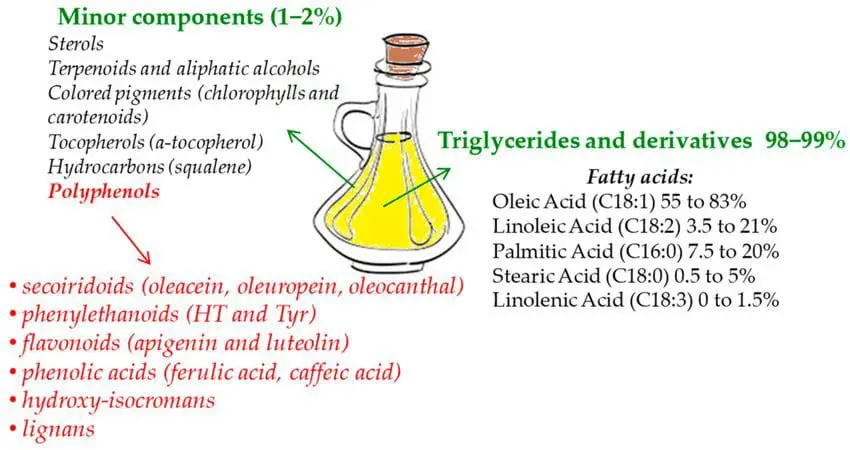
Olivenolie består hovedsageligt af oliesyre (op til 83%) med mindre mængder af andre fedtsyrer, herunder linolsyre (op til 21%) og palmitinsyre (op til 20%). Cirka 98%-99% af EVOO – ekstra jomfruolivenolie (den forsæbelige fraktion) består af triglycerider i form af hovedsageligt MUFA'er (oliesyre), betydelige mængder flerumættede fedtsyrer (linolsyre og α-linolensyre) og små mængder mættede fedtsyrer (palmitinsyre 7,5%-20% og stearinsyre 0,5%-5%).
Constituents / Ingredients
Olive oil is composed mainly of the mixed triglyceride esters of oleic acid, linoleic acid, palmitic acid and of other fatty acids, along with traces of squalene (up to 0,7%) and sterols (about 0,2% phytosterol and tocosterols).
Takket være dens status som en spotlight-fødevare i middelhavskosten (og Græsk/kretensisk kost (især), og takket være omfattende forskning i dens unikke fytonæringsstofsammensætning er olivenolie blevet en legendarisk kulinarisk olie med meget vanskeligt matchbare sundhedsmæssige fordele ved andre spiselige olier. Blandt dens omfattende liste over fytonæringsstoffer er ingen enkelt kategori af næringsstoffer i olivenolie vigtigere end dens polyfenoler. Polyfenolindholdet i denne lækre olie er virkelig fantastisk!
Olivenolie har et meget højt indhold af enkeltumættede fedtstoffer og indeholder en beskeden mængde E- og K-vitamin. Ekstra jomfruolivenolie er også fyldt med antioxidanter, hvoraf nogle har stærke sundhedsmæssige fordele. Olivenfrugten og den kompressionsekstraherede olivenolie har en bred vifte af terapeutiske anvendelser udover de kulinariske anvendelser inden for menneskelig ernæring.
Listen nedenfor viser nogle af de vigtigste polyfenoler, der findes i olivenolie, organiseret efter deres kemiske kategori:
Simple fenoler
Anthocyanidiner
– tyrosol
– cyanidins
– hydroxytyrosol
– peonidins
Terpener
Flavonoler
– oleuropein
– quercetin
– ligstroside
– kaempferol
Flavoner
Flavonoidglykosider
– apigenin
– rutine
– luteolin
Lignaner
Hydroxykanelsyrer
– pinoresinol
– caffeic acid
Hydroxybenzoesyrer
– cinnamic acid
– vanillic acid
– ferulic acid
– sprøjtesyre
– coumaric acid
Ingredienser i olivenolie
De fleste polyfenoler på denne liste har vist sig at fungere både som antioxidanter og også som antiinflammatorisk næringsstoffer i kroppen. Selve antallet og variationen af polyfenoler i olivenolie er med til at forklare de unikke sundhedsmæssige fordele ved denne kulinariske olie.
Den nøjagtige kemiske sammensætning af olivenolie kan variere afhængigt af faktorer som olivensorten, klimaet og jordbunden i olivenlunden, vækstbetingelser, høstmetoder og forarbejdningsmetoder til udvinding af olivenolie fra olivenfrugten.
ingredients of Extra-virgin Olive Oil – EVOO main components
Nutrient Composition of Olive Oil & comparison with Nutrient Composition of other oils
List of the Nutrient Composition and Ingredients of Extra Virgin Olive Oil and Olive Oil vs. other oils
Nutrient composition of extra virgin olive oil:
Extra virgin olive oil is rich in heart-healthy fats, along with vitamin E and vitamin K.
A tablespoon (about 14 grams) of olive oil contains the following nutrients:
Calories: 119
Saturated fat: 14% of total calories
Monounsaturated fat: 73% of total calories (mostly oleic acid)
Polyunsaturated fat (PUFA): 11% of total calories
Vitamin E: 13% of the Daily Value (DV)
Vitamin K: 7% of the DV
Extra virgin olive oil is a great source of antioxidants, which are compounds that help fight inflammation and chronic disease.
The oil’s main antioxidants include the anti-inflammatory oleocanthal, as well as oleuropein, a substance that protects LDL (bad) cholesterol from oxidation.
Some people have criticized olive oil for having a high omega-6 to omega-3 ratio. However, its total amount of polyunsaturated fats is still relatively low, so you probably don’t need to worry.
In addition to extra virgin olive oil, there are many other popular cooking oils available, including regular olive oil, canola oil, vegetable oil, avocado oil, and coconut oil.
Here is a closer look at how extra virgin olive oil compares to these other types of oils:
Yes, olive oil is gluten-free by nature when we’re talking about the main classes (types) of olive oil (pure olive oil, virgin olive oil, extra virgin olive oil). For all olive oils the only real ingredient in olive oil is the olives fruit extract…
There are two exceptions, situations where you need to be a bit careful: 1) when you are dealing with an infused or flavored olive oil. 2) When olive oil is made in a facility that also produces gluten-containing foods
When olive oil is produced in a shared facility that produces gluten-containing foods, there may be a slight possibility for cross-contamination and although the amount of gluten present in an olive oil would be extremely low in these instances, there could potentially be a concern for someone with celiac disease. Its recommended you look for olive oil that is certified gluten-free, or produced in an allergen-free facility.
Infused/Flavored olive oils, the only time you may really run into trouble is when you’re dealing with smoke-flavored olive oil – whether it’s olive oil or any other cooking oil such as canola oil or vegetable oil. In some “natural smoke flavoring,” the gluten-containing grain barley is used as an ingredient. So, these oils should be avoided unless the oil has a gluten-free certification or you’ve ensured that the manufacturer uses a gluten-free version of smoke flavoring.
Is Olive Oil vegan?
Olive oil is a single-ingredient plant-based food, and beside this, during the olive oil production process, there is no addition of animal-derived products.
So even for the strictest vegans, olive oil is perfectly acceptable. Plus, olive oil is also a great source of nutrient-dense fat, which can sometimes be lacking in poorly formulated vegan diets.
The olive tree, Olea Europaea, is native to the Mediterranean basin and parts of Asia Minor. The fruit and compression-extracted oil have a wide range of therapeutic and culinary applications. Olive oil also constitutes a major component of the “Mediterranean diet.” The chief active components of olive oil include oleic acid, phenolic constituents, and squalene. The main phenolics include hydroxytyrosol, tyrosol, and oleuropein, which occur in highest levels in virgin olive oil and have demonstrated antioxidant activity.
Antioxidants are believed to be responsible for a number of olive oil’s biological activities. Oleic acid, a monounsaturated fatty acid, has shown activity in cancer prevention, while squalene has also been identified as having anticancer effects. Olive oil consumption has benefit for colon and breast cancer prevention.
The oil has been widely studied for its effects on coronary heart disease (CHD), specifically for its ability to reduce blood pressure and low-density lipoprotein (LDL) cholesterol.
Antimicrobial activity of hydroxytyrosol, tyrosol, and oleuropein has been demonstrated against several strains of bacteria implicated in intestinal and respiratory infections.
Although the majority of research has been conducted on the oil, consumption of whole olives might also confer health benefits.
Learn more about the Chemical Characteristics of Olive Oil – Fatty Acids, Trans Fatty Acids, Long Chain Fatty Acids, Percentage of Linolenic Acid allowed in olive oil, “Essential” Fatty Acids, Free Fatty Acids (FFA) and Olive Oil Acidity, Polyphenols (Antioxidants), Peroxides, Pigments and Color, Vitamins, Polycyclic Aromatic Hydrocarbons (PAHs) and more…
An informative video on Olive Oil – check the video for more olive oil chemistry, how to keep fresh, how to best use it to give your food a flavor boost
Vi er en århundreder lang familieejet virksomhed (est. 1912) inden for produktion af EVOO olivenolie på øen KRETA i GRÆKENLAND. Vores premium kretensiske ekstra jomfruolivenolie og kulinariske fødevarer eksporteres i over 40 lande verden over til et omhyggeligt udvalgt netværk af partnere. KONTAKT OS, BLIV VORES NÆSTE VÆRDIFULDE FORRETNINGSPARTNER! for ekstra jomfruolivenolie (EVOO) – Økologisk (Bio) ekstra jomfruolivenolie (Økologisk EVOO) – Græske spiseoliven – Balsamicoeddike – Delikatesser, alt fra KRETA GRÆKENLAND.
Informationsarrangement til promovering af den traditionelle kretensiske olivenlund Informationsarrangement til promovering af den traditionelle kretensiske...
Olivenolie - Organoleptiske egenskaber: Olivenolie er ikke kun et sundt fedtstof, men også et komplekst og smagfuldt produkt. Det organoleptiske pro...


 Olivenolie Engros – Olivenolie Engros Leverandører & Distributører