Olive Oil Ingredients – composition of the Olive Oil
The Olive Oil Ingredients
Learn more about the Chemical Characteristics of Olive Oil – Fatty Acids, Trans Fatty Acids, Long Chain Fatty Acids, Percentage of Linolenic Acid allowed in olive oil, “Essential” Fatty Acids, Free Fatty Acids (FFA) and Olive Oil Acidity, Polyphenols (Antioxidants), Peroxides, Pigments and Color, Vitamins, Polycyclic Aromatic Hydrocarbons (PAHs) and more…
An informative video on Olive Oil – check the video for more olive oil chemistry, how to keep fresh, how to best use it to give your food a flavor boost
Vi är ett århundraden långt familjeföretag (grundat 1912) som producerar EVOO-olivolja på ön KRETA i GREKLAND. Vår premium kretensiska extra jungfruolivolja och kulinariska livsmedelsprodukter exporteras i över 40 länder världen över till ett noggrant utvalt nätverk av partners. KONTAKTA OSS, BLI VÅR NÄSTA VÄRDEFULLA AFFÄRSPARTNER! för extra jungfruolivolja (EVOO) – Ekologisk (Bio) Extra jungfruolivolja (Ekologisk EVOO) – Grekiska bordsoliver – Balsamvinäger – Delikatesser, allt från KRETA, GREKLAND.
De flesta polyfenolerna i den här listan har visat sig fungera både som antioxidanter och även som antiinflammatorisk näringsämnen i kroppen. Själva antalet och variationen av polyfenoler i olivolja bidrar till att förklara de unika hälsofördelarna med denna kulinariska olja.
Den exakta kemiska sammansättningen av olivolja kan variera beroende på faktorer som olivsort, klimat och jordmån i olivlunden, odlingsförhållanden, skördemetoder och bearbetningsmetoder för utvinning av olivolja från olivfrukten.
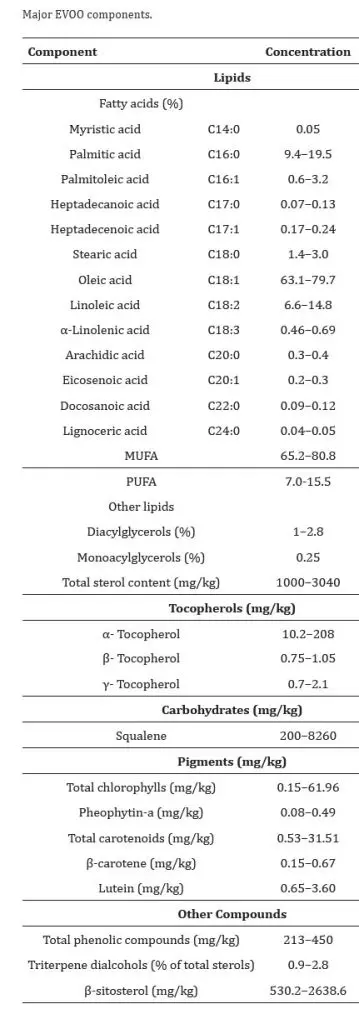
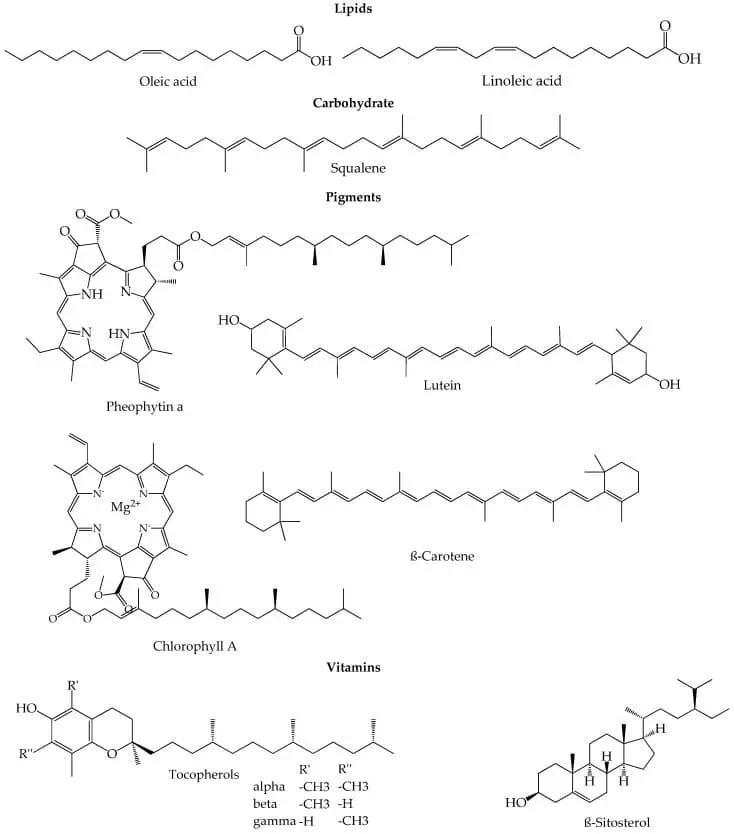
ingredients of Extra-virgin Olive Oil – EVOO main components
Nutrient Composition of Olive Oil & comparison with Nutrient Composition of other oils
List of the Nutrient Composition and Ingredients of Extra Virgin Olive Oil and Olive Oil vs. other oils
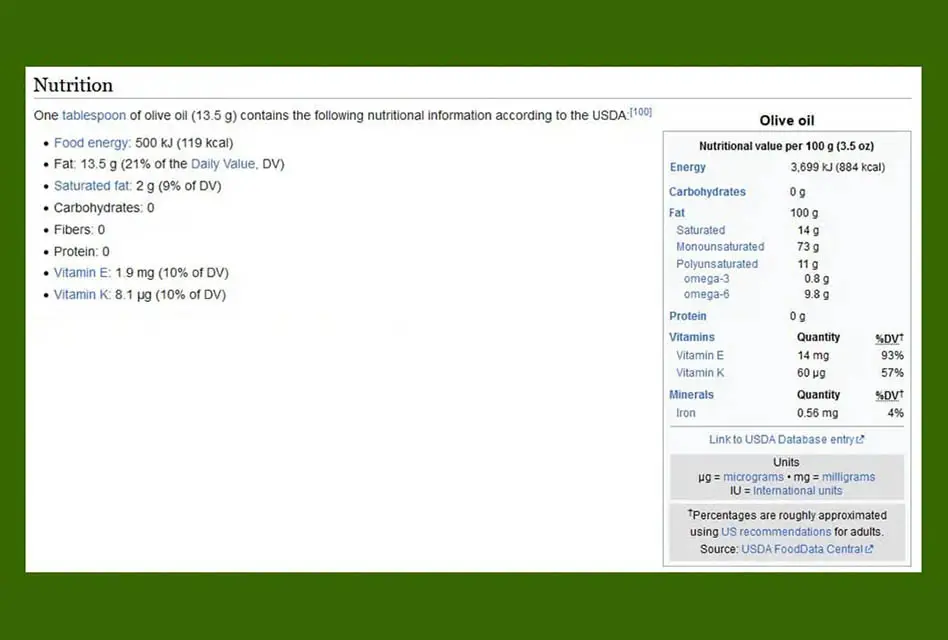
Nutrient composition of extra virgin olive oil:
Extra virgin olive oil is rich in heart-healthy fats, along with vitamin E and vitamin K.
A tablespoon (about 14 grams) of olive oil contains the following nutrients:
Calories: 119
Saturated fat: 14% of total calories
Monounsaturated fat: 73% of total calories (mostly oleic acid)
Polyunsaturated fat (PUFA): 11% of total calories
Vitamin E: 13% of the Daily Value (DV)
Vitamin K: 7% of the DV
Extra virgin olive oil is a great source of antioxidants, which are compounds that help fight inflammation and chronic disease.
The oil’s main antioxidants include the anti-inflammatory oleocanthal, as well as oleuropein, a substance that protects LDL (bad) cholesterol from oxidation.
Some people have criticized olive oil for having a high omega-6 to omega-3 ratio. However, its total amount of polyunsaturated fats is still relatively low, so you probably don’t need to worry.
In addition to extra virgin olive oil, there are many other popular cooking oils available, including regular olive oil, canola oil, vegetable oil, avocado oil, and coconut oil.
Here is a closer look at how extra virgin olive oil compares to these other types of oils:
Yes, olive oil is gluten-free by nature when we’re talking about the main classes (types) of olive oil (pure olive oil, virgin olive oil, extra virgin olive oil). For all olive oils the only real ingredient in olive oil is the olives fruit extract…
There are two exceptions, situations where you need to be a bit careful: 1) when you are dealing with an infused or flavored olive oil. 2) When olive oil is made in a facility that also produces gluten-containing foods
When olive oil is produced in a shared facility that produces gluten-containing foods, there may be a slight possibility for cross-contamination and although the amount of gluten present in an olive oil would be extremely low in these instances, there could potentially be a concern for someone with celiac disease. Its recommended you look for olive oil that is certified gluten-free, or produced in an allergen-free facility.
Infused/Flavored olive oils, the only time you may really run into trouble is when you’re dealing with smoke-flavored olive oil – whether it’s olive oil or any other cooking oil such as canola oil or vegetable oil. In some “natural smoke flavoring,” the gluten-containing grain barley is used as an ingredient. So, these oils should be avoided unless the oil has a gluten-free certification or you’ve ensured that the manufacturer uses a gluten-free version of smoke flavoring.
Is Olive Oil vegan?
Olive oil is a single-ingredient plant-based food, and beside this, during the olive oil production process, there is no addition of animal-derived products.
So even for the strictest vegans, olive oil is perfectly acceptable. Plus, olive oil is also a great source of nutrient-dense fat, which can sometimes be lacking in poorly formulated vegan diets.
The olive tree, Olea Europaea, is native to the Mediterranean basin and parts of Asia Minor. The fruit and compression-extracted oil have a wide range of therapeutic and culinary applications. Olive oil also constitutes a major component of the “Mediterranean diet.” The chief active components of olive oil include oleic acid, phenolic constituents, and squalene. The main phenolics include hydroxytyrosol, tyrosol, and oleuropein, which occur in highest levels in virgin olive oil and have demonstrated antioxidant activity.
Antioxidants are believed to be responsible for a number of olive oil’s biological activities. Oleic acid, a monounsaturated fatty acid, has shown activity in cancer prevention, while squalene has also been identified as having anticancer effects. Olive oil consumption has benefit for colon and breast cancer prevention.
The oil has been widely studied for its effects on coronary heart disease (CHD), specifically for its ability to reduce blood pressure and low-density lipoprotein (LDL) cholesterol.
Antimicrobial activity of hydroxytyrosol, tyrosol, and oleuropein has been demonstrated against several strains of bacteria implicated in intestinal and respiratory infections.
Although the majority of research has been conducted on the oil, consumption of whole olives might also confer health benefits.
Learn more about the Chemical Characteristics of Olive Oil – Fatty Acids, Trans Fatty Acids, Long Chain Fatty Acids, Percentage of Linolenic Acid allowed in olive oil, “Essential” Fatty Acids, Free Fatty Acids (FFA) and Olive Oil Acidity, Polyphenols (Antioxidants), Peroxides, Pigments and Color, Vitamins, Polycyclic Aromatic Hydrocarbons (PAHs) and more…
An informative video on Olive Oil – check the video for more olive oil chemistry, how to keep fresh, how to best use it to give your food a flavor boost
Vi är ett århundraden långt familjeföretag (grundat 1912) som producerar EVOO-olivolja på ön KRETA i GREKLAND. Vår premium kretensiska extra jungfruolivolja och kulinariska livsmedelsprodukter exporteras i över 40 länder världen över till ett noggrant utvalt nätverk av partners. KONTAKTA OSS, BLI VÅR NÄSTA VÄRDEFULLA AFFÄRSPARTNER! för extra jungfruolivolja (EVOO) – Ekologisk (Bio) Extra jungfruolivolja (Ekologisk EVOO) – Grekiska bordsoliver – Balsamvinäger – Delikatesser, allt från KRETA, GREKLAND.
Listan nedan visar några av de viktigaste polyfenolerna som finns i olivolja, organiserade efter deras kemiska kategori:
Enkla fenoler
Antocyanidiner
– tyrosol
– cyanidins
– hydroxytyrosol
– peonidins
Terpener
Flavonoler
– oleuropein
– quercetin
– ligstroside
– kaempferol
Flavoner
Flavonoidglykosider
– apigenin
– rutin
– luteolin
Lignaner
Hydroxykanelsyror
– pinoresinol
– caffeic acid
Hydroxibensoesyra
– cinnamic acid
– vanillic acid
– ferulic acid
– sprutsyra
– coumaric acid
Ingredienser i olivolja
De flesta polyfenolerna i den här listan har visat sig fungera både som antioxidanter och även som antiinflammatorisk näringsämnen i kroppen. Själva antalet och variationen av polyfenoler i olivolja bidrar till att förklara de unika hälsofördelarna med denna kulinariska olja.
Den exakta kemiska sammansättningen av olivolja kan variera beroende på faktorer som olivsort, klimat och jordmån i olivlunden, odlingsförhållanden, skördemetoder och bearbetningsmetoder för utvinning av olivolja från olivfrukten.
ingredients of Extra-virgin Olive Oil – EVOO main components
Nutrient Composition of Olive Oil & comparison with Nutrient Composition of other oils
List of the Nutrient Composition and Ingredients of Extra Virgin Olive Oil and Olive Oil vs. other oils
Nutrient composition of extra virgin olive oil:
Extra virgin olive oil is rich in heart-healthy fats, along with vitamin E and vitamin K.
A tablespoon (about 14 grams) of olive oil contains the following nutrients:
Calories: 119
Saturated fat: 14% of total calories
Monounsaturated fat: 73% of total calories (mostly oleic acid)
Polyunsaturated fat (PUFA): 11% of total calories
Vitamin E: 13% of the Daily Value (DV)
Vitamin K: 7% of the DV
Extra virgin olive oil is a great source of antioxidants, which are compounds that help fight inflammation and chronic disease.
The oil’s main antioxidants include the anti-inflammatory oleocanthal, as well as oleuropein, a substance that protects LDL (bad) cholesterol from oxidation.
Some people have criticized olive oil for having a high omega-6 to omega-3 ratio. However, its total amount of polyunsaturated fats is still relatively low, so you probably don’t need to worry.
In addition to extra virgin olive oil, there are many other popular cooking oils available, including regular olive oil, canola oil, vegetable oil, avocado oil, and coconut oil.
Here is a closer look at how extra virgin olive oil compares to these other types of oils:
Yes, olive oil is gluten-free by nature when we’re talking about the main classes (types) of olive oil (pure olive oil, virgin olive oil, extra virgin olive oil). For all olive oils the only real ingredient in olive oil is the olives fruit extract…
There are two exceptions, situations where you need to be a bit careful: 1) when you are dealing with an infused or flavored olive oil. 2) When olive oil is made in a facility that also produces gluten-containing foods
When olive oil is produced in a shared facility that produces gluten-containing foods, there may be a slight possibility for cross-contamination and although the amount of gluten present in an olive oil would be extremely low in these instances, there could potentially be a concern for someone with celiac disease. Its recommended you look for olive oil that is certified gluten-free, or produced in an allergen-free facility.
Infused/Flavored olive oils, the only time you may really run into trouble is when you’re dealing with smoke-flavored olive oil – whether it’s olive oil or any other cooking oil such as canola oil or vegetable oil. In some “natural smoke flavoring,” the gluten-containing grain barley is used as an ingredient. So, these oils should be avoided unless the oil has a gluten-free certification or you’ve ensured that the manufacturer uses a gluten-free version of smoke flavoring.
Is Olive Oil vegan?
Olive oil is a single-ingredient plant-based food, and beside this, during the olive oil production process, there is no addition of animal-derived products.
So even for the strictest vegans, olive oil is perfectly acceptable. Plus, olive oil is also a great source of nutrient-dense fat, which can sometimes be lacking in poorly formulated vegan diets.
The olive tree, Olea Europaea, is native to the Mediterranean basin and parts of Asia Minor. The fruit and compression-extracted oil have a wide range of therapeutic and culinary applications. Olive oil also constitutes a major component of the “Mediterranean diet.” The chief active components of olive oil include oleic acid, phenolic constituents, and squalene. The main phenolics include hydroxytyrosol, tyrosol, and oleuropein, which occur in highest levels in virgin olive oil and have demonstrated antioxidant activity.
Antioxidants are believed to be responsible for a number of olive oil’s biological activities. Oleic acid, a monounsaturated fatty acid, has shown activity in cancer prevention, while squalene has also been identified as having anticancer effects. Olive oil consumption has benefit for colon and breast cancer prevention.
The oil has been widely studied for its effects on coronary heart disease (CHD), specifically for its ability to reduce blood pressure and low-density lipoprotein (LDL) cholesterol.
Antimicrobial activity of hydroxytyrosol, tyrosol, and oleuropein has been demonstrated against several strains of bacteria implicated in intestinal and respiratory infections.
Although the majority of research has been conducted on the oil, consumption of whole olives might also confer health benefits.
Learn more about the Chemical Characteristics of Olive Oil – Fatty Acids, Trans Fatty Acids, Long Chain Fatty Acids, Percentage of Linolenic Acid allowed in olive oil, “Essential” Fatty Acids, Free Fatty Acids (FFA) and Olive Oil Acidity, Polyphenols (Antioxidants), Peroxides, Pigments and Color, Vitamins, Polycyclic Aromatic Hydrocarbons (PAHs) and more…
An informative video on Olive Oil – check the video for more olive oil chemistry, how to keep fresh, how to best use it to give your food a flavor boost
Vi är ett århundraden långt familjeföretag (grundat 1912) som producerar EVOO-olivolja på ön KRETA i GREKLAND. Vår premium kretensiska extra jungfruolivolja och kulinariska livsmedelsprodukter exporteras i över 40 länder världen över till ett noggrant utvalt nätverk av partners. KONTAKTA OSS, BLI VÅR NÄSTA VÄRDEFULLA AFFÄRSPARTNER! för extra jungfruolivolja (EVOO) – Ekologisk (Bio) Extra jungfruolivolja (Ekologisk EVOO) – Grekiska bordsoliver – Balsamvinäger – Delikatesser, allt från KRETA, GREKLAND.
Vilka ingredienser finns i ren olivolja? De viktigaste aktiva komponenterna i olivolja inkluderar oljesyra, fenoliska beståndsdelar och squalen.
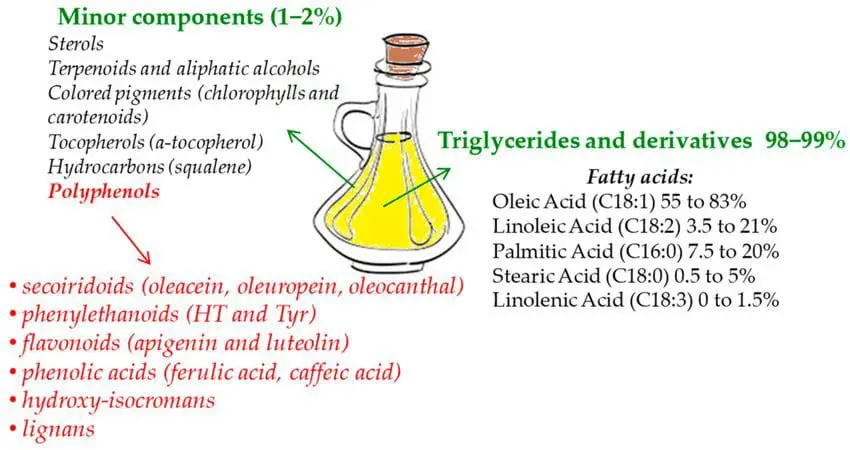
Olivolja består huvudsakligen av oljesyra (upp till 83 %), med mindre mängder av andra fettsyror, inklusive linolsyra (upp till 21 %) och palmitinsyra (upp till 20 %). Ungefär 98–99 % av EVOO – extra jungfruolivolja (den förtvålbara fraktionen) består av triglycerider i form av mestadels fleromättade fettsyror (MUFAs), betydande mängder fleromättade fetter (linolsyra och α-linolensyra) och små mängder mättat fett (palmitinsyra 7,5–20 % och stearinsyra 0,5–5 %).
Constituents / Ingredients
Olive oil is composed mainly of the mixed triglyceride esters of oleic acid, linoleic acid, palmitic acid and of other fatty acids, along with traces of squalene (up to 0,7%) and sterols (about 0,2% phytosterol and tocosterols).
Tack vare dess status som en spotlight-mat i Medelhavsdieten (och Grekisk/kretensisk kost (i synnerhet), och tack vare omfattande forskning om dess unika fytonäringsämnessammansättning har olivolja blivit en legendarisk kulinarisk olja med mycket svårmatchade hälsofördelar som andra ätbara oljor kan uppvisa. Bland dess omfattande lista över fytonäringsämnen är ingen enskild kategori av näringsämnen i olivolja viktigare än dess polyfenoler. Polyfenolhalten i denna läckra olja är verkligen fantastisk!
Olivolja är mycket rik på enkelomättade fetter och innehåller en blygsam mängd vitamin E och K. Extra jungfruolja är också full av antioxidanter, av vilka några har kraftfulla hälsofördelar. Olivolja och kompressionsextraherad olivolja har ett brett spektrum av terapeutiska tillämpningar utöver de kulinariska inom mänsklig näring.
Listan nedan visar några av de viktigaste polyfenolerna som finns i olivolja, organiserade efter deras kemiska kategori:
Enkla fenoler
Antocyanidiner
– tyrosol
– cyanidins
– hydroxytyrosol
– peonidins
Terpener
Flavonoler
– oleuropein
– quercetin
– ligstroside
– kaempferol
Flavoner
Flavonoidglykosider
– apigenin
– rutin
– luteolin
Lignaner
Hydroxykanelsyror
– pinoresinol
– caffeic acid
Hydroxibensoesyra
– cinnamic acid
– vanillic acid
– ferulic acid
– sprutsyra
– coumaric acid
Ingredienser i olivolja
De flesta polyfenolerna i den här listan har visat sig fungera både som antioxidanter och även som antiinflammatorisk näringsämnen i kroppen. Själva antalet och variationen av polyfenoler i olivolja bidrar till att förklara de unika hälsofördelarna med denna kulinariska olja.
Den exakta kemiska sammansättningen av olivolja kan variera beroende på faktorer som olivsort, klimat och jordmån i olivlunden, odlingsförhållanden, skördemetoder och bearbetningsmetoder för utvinning av olivolja från olivfrukten.
ingredients of Extra-virgin Olive Oil – EVOO main components
Nutrient Composition of Olive Oil & comparison with Nutrient Composition of other oils
List of the Nutrient Composition and Ingredients of Extra Virgin Olive Oil and Olive Oil vs. other oils
Nutrient composition of extra virgin olive oil:
Extra virgin olive oil is rich in heart-healthy fats, along with vitamin E and vitamin K.
A tablespoon (about 14 grams) of olive oil contains the following nutrients:
Calories: 119
Saturated fat: 14% of total calories
Monounsaturated fat: 73% of total calories (mostly oleic acid)
Polyunsaturated fat (PUFA): 11% of total calories
Vitamin E: 13% of the Daily Value (DV)
Vitamin K: 7% of the DV
Extra virgin olive oil is a great source of antioxidants, which are compounds that help fight inflammation and chronic disease.
The oil’s main antioxidants include the anti-inflammatory oleocanthal, as well as oleuropein, a substance that protects LDL (bad) cholesterol from oxidation.
Some people have criticized olive oil for having a high omega-6 to omega-3 ratio. However, its total amount of polyunsaturated fats is still relatively low, so you probably don’t need to worry.
In addition to extra virgin olive oil, there are many other popular cooking oils available, including regular olive oil, canola oil, vegetable oil, avocado oil, and coconut oil.
Here is a closer look at how extra virgin olive oil compares to these other types of oils:
Yes, olive oil is gluten-free by nature when we’re talking about the main classes (types) of olive oil (pure olive oil, virgin olive oil, extra virgin olive oil). For all olive oils the only real ingredient in olive oil is the olives fruit extract…
There are two exceptions, situations where you need to be a bit careful: 1) when you are dealing with an infused or flavored olive oil. 2) When olive oil is made in a facility that also produces gluten-containing foods
When olive oil is produced in a shared facility that produces gluten-containing foods, there may be a slight possibility for cross-contamination and although the amount of gluten present in an olive oil would be extremely low in these instances, there could potentially be a concern for someone with celiac disease. Its recommended you look for olive oil that is certified gluten-free, or produced in an allergen-free facility.
Infused/Flavored olive oils, the only time you may really run into trouble is when you’re dealing with smoke-flavored olive oil – whether it’s olive oil or any other cooking oil such as canola oil or vegetable oil. In some “natural smoke flavoring,” the gluten-containing grain barley is used as an ingredient. So, these oils should be avoided unless the oil has a gluten-free certification or you’ve ensured that the manufacturer uses a gluten-free version of smoke flavoring.
Is Olive Oil vegan?
Olive oil is a single-ingredient plant-based food, and beside this, during the olive oil production process, there is no addition of animal-derived products.
So even for the strictest vegans, olive oil is perfectly acceptable. Plus, olive oil is also a great source of nutrient-dense fat, which can sometimes be lacking in poorly formulated vegan diets.
The olive tree, Olea Europaea, is native to the Mediterranean basin and parts of Asia Minor. The fruit and compression-extracted oil have a wide range of therapeutic and culinary applications. Olive oil also constitutes a major component of the “Mediterranean diet.” The chief active components of olive oil include oleic acid, phenolic constituents, and squalene. The main phenolics include hydroxytyrosol, tyrosol, and oleuropein, which occur in highest levels in virgin olive oil and have demonstrated antioxidant activity.
Antioxidants are believed to be responsible for a number of olive oil’s biological activities. Oleic acid, a monounsaturated fatty acid, has shown activity in cancer prevention, while squalene has also been identified as having anticancer effects. Olive oil consumption has benefit for colon and breast cancer prevention.
The oil has been widely studied for its effects on coronary heart disease (CHD), specifically for its ability to reduce blood pressure and low-density lipoprotein (LDL) cholesterol.
Antimicrobial activity of hydroxytyrosol, tyrosol, and oleuropein has been demonstrated against several strains of bacteria implicated in intestinal and respiratory infections.
Although the majority of research has been conducted on the oil, consumption of whole olives might also confer health benefits.
Learn more about the Chemical Characteristics of Olive Oil – Fatty Acids, Trans Fatty Acids, Long Chain Fatty Acids, Percentage of Linolenic Acid allowed in olive oil, “Essential” Fatty Acids, Free Fatty Acids (FFA) and Olive Oil Acidity, Polyphenols (Antioxidants), Peroxides, Pigments and Color, Vitamins, Polycyclic Aromatic Hydrocarbons (PAHs) and more…
An informative video on Olive Oil – check the video for more olive oil chemistry, how to keep fresh, how to best use it to give your food a flavor boost
Vi är ett århundraden långt familjeföretag (grundat 1912) som producerar EVOO-olivolja på ön KRETA i GREKLAND. Vår premium kretensiska extra jungfruolivolja och kulinariska livsmedelsprodukter exporteras i över 40 länder världen över till ett noggrant utvalt nätverk av partners. KONTAKTA OSS, BLI VÅR NÄSTA VÄRDEFULLA AFFÄRSPARTNER! för extra jungfruolivolja (EVOO) – Ekologisk (Bio) Extra jungfruolivolja (Ekologisk EVOO) – Grekiska bordsoliver – Balsamvinäger – Delikatesser, allt från KRETA, GREKLAND.
Olivolja - Organoleptiska egenskaper: Olivolja är inte bara ett hälsosamt fett utan också en komplex och smakrik produkt. De organoleptiska egenskaperna...


 Olivolja Partihandel – Olivolja Partihandel Leverantörer och Distributörer