Olive Oil Ingredients – composition of the Olive Oil
The Olive Oil Ingredients
Learn more about the Chemical Characteristics of Olive Oil – Fatty Acids, Trans Fatty Acids, Long Chain Fatty Acids, Percentage of Linolenic Acid allowed in olive oil, “Essential” Fatty Acids, Free Fatty Acids (FFA) and Olive Oil Acidity, Polyphenols (Antioxidants), Peroxides, Pigments and Color, Vitamins, Polycyclic Aromatic Hydrocarbons (PAHs) and more…
An informative video on Olive Oil – check the video for more olive oil chemistry, how to keep fresh, how to best use it to give your food a flavor boost
ما یک شرکت خانوادگی با قدمت چند قرن (تأسیس ۱۹۱۲) در تولید روغن زیتون فوق بکر (EVOO) در جزیره کرت در یونان هستیم. روغن زیتون فوق بکر ممتاز کرت و محصولات غذایی آشپزی ما به بیش از ۴۰ کشور در سراسر جهان به شبکهای از شرکای منتخب صادر میشود. با ما تماس بگیرید، شریک تجاری ارزشمند بعدی ما باشید! برای روغن زیتون فوق بکر (EVOO) - ارگانیک (بیو) روغن زیتون فوق بکر (EVOO ارگانیک) - زیتونهای خوراکی یونانی - سرکه بالزامیک - غذاهای آماده، همه از کرت یونان
نشان داده شده است که اکثر پلی فنولهای موجود در این لیست، هم به عنوان ... عمل میکنند و هم به عنوان ... آنتیاکسیدانها و همچنین به عنوان ضد التهاب مواد مغذی در بدن. تعداد و تنوع بالای پلی فنولهای موجود در روغن زیتون، فواید بینظیر این روغن آشپزی برای سلامتی را توضیح میدهد.
ترکیب شیمیایی دقیق روغن زیتون میتواند بسته به عواملی مانند گونه زیتون، آب و هوا و خاک باغ زیتون، شرایط رشد، روشهای برداشت و روشهای فرآوری برای استخراج روغن زیتون از میوه زیتون متفاوت باشد.
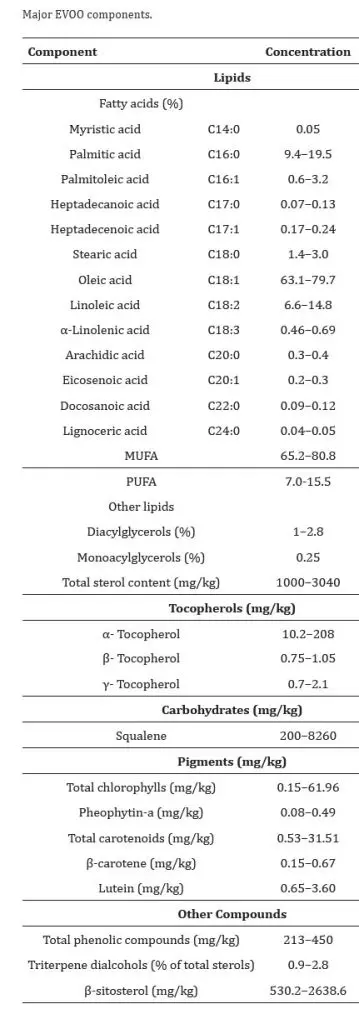
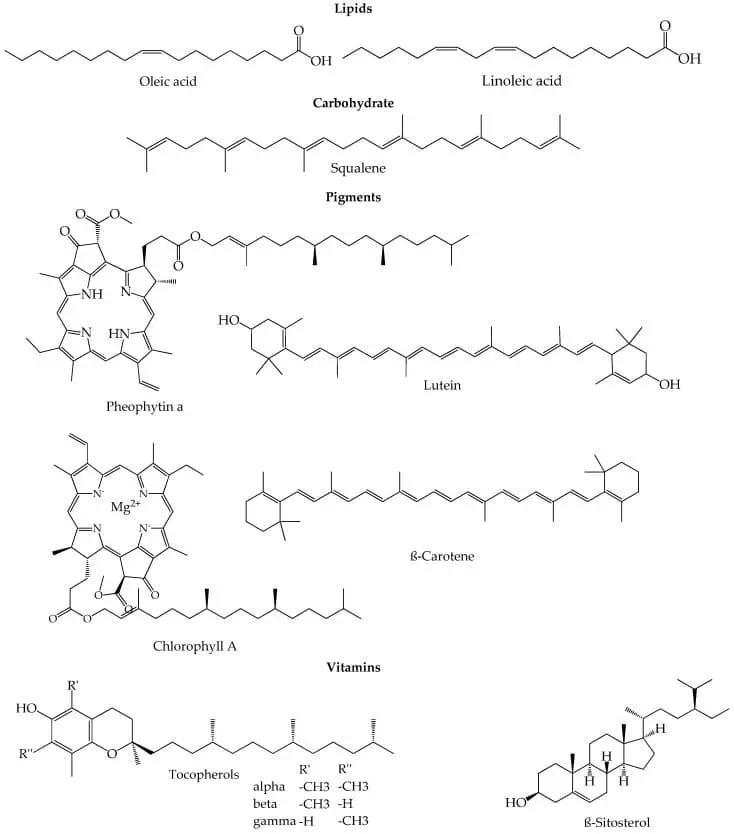
ingredients of Extra-virgin Olive Oil – EVOO main components
Nutrient Composition of Olive Oil & comparison with Nutrient Composition of other oils
List of the Nutrient Composition and Ingredients of Extra Virgin Olive Oil and Olive Oil vs. other oils
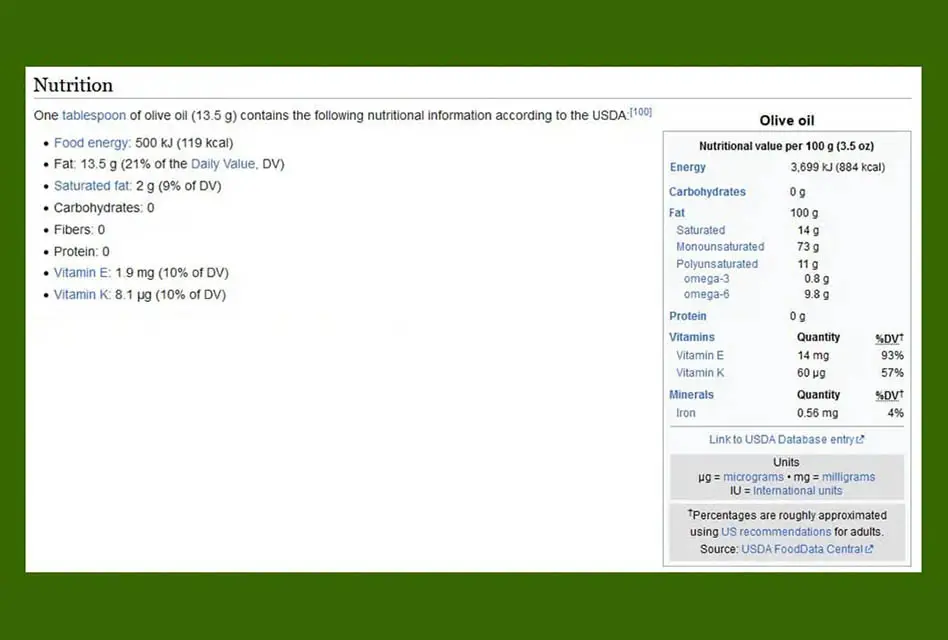
Nutrient composition of extra virgin olive oil:
Extra virgin olive oil is rich in heart-healthy fats, along with vitamin E and vitamin K.
A tablespoon (about 14 grams) of olive oil contains the following nutrients:
Calories: 119
Saturated fat: 14% of total calories
Monounsaturated fat: 73% of total calories (mostly oleic acid)
Polyunsaturated fat (PUFA): 11% of total calories
Vitamin E: 13% of the Daily Value (DV)
Vitamin K: 7% of the DV
Extra virgin olive oil is a great source of antioxidants, which are compounds that help fight inflammation and chronic disease.
The oil’s main antioxidants include the anti-inflammatory oleocanthal, as well as oleuropein, a substance that protects LDL (bad) cholesterol from oxidation.
Some people have criticized olive oil for having a high omega-6 to omega-3 ratio. However, its total amount of polyunsaturated fats is still relatively low, so you probably don’t need to worry.
In addition to extra virgin olive oil, there are many other popular cooking oils available, including regular olive oil, canola oil, vegetable oil, avocado oil, and coconut oil.
Here is a closer look at how extra virgin olive oil compares to these other types of oils:
Yes, olive oil is gluten-free by nature when we’re talking about the main classes (types) of olive oil (pure olive oil, virgin olive oil, extra virgin olive oil). For all olive oils the only real ingredient in olive oil is the olives fruit extract…
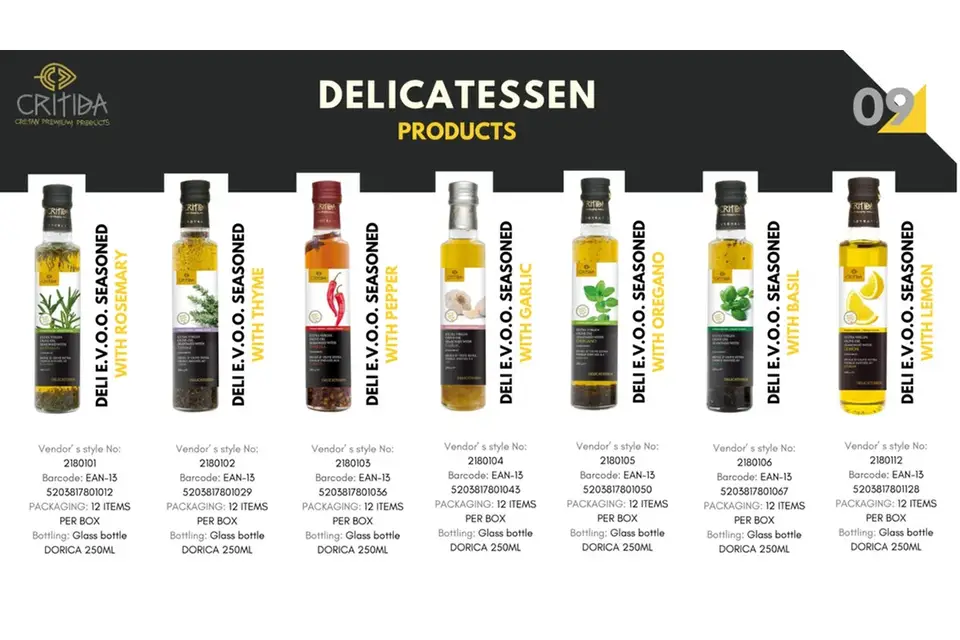
There are two exceptions, situations where you need to be a bit careful: 1) when you are dealing with an infused or flavored olive oil. 2) When olive oil is made in a facility that also produces gluten-containing foods
When olive oil is produced in a shared facility that produces gluten-containing foods, there may be a slight possibility for cross-contamination and although the amount of gluten present in an olive oil would be extremely low in these instances, there could potentially be a concern for someone with celiac disease. Its recommended you look for olive oil that is certified gluten-free, or produced in an allergen-free facility.
Infused/Flavored olive oils, the only time you may really run into trouble is when you’re dealing with smoke-flavored olive oil – whether it’s olive oil or any other cooking oil such as canola oil or vegetable oil. In some “natural smoke flavoring,” the gluten-containing grain barley is used as an ingredient. So, these oils should be avoided unless the oil has a gluten-free certification or you’ve ensured that the manufacturer uses a gluten-free version of smoke flavoring.
Is Olive Oil vegan?
Olive oil is a single-ingredient plant-based food, and beside this, during the olive oil production process, there is no addition of animal-derived products.
So even for the strictest vegans, olive oil is perfectly acceptable. Plus, olive oil is also a great source of nutrient-dense fat, which can sometimes be lacking in poorly formulated vegan diets.
The olive tree, Olea Europaea, is native to the Mediterranean basin and parts of Asia Minor. The fruit and compression-extracted oil have a wide range of therapeutic and culinary applications. Olive oil also constitutes a major component of the “Mediterranean diet.” The chief active components of olive oil include oleic acid, phenolic constituents, and squalene. The main phenolics include hydroxytyrosol, tyrosol, and oleuropein, which occur in highest levels in virgin olive oil and have demonstrated antioxidant activity.
Antioxidants are believed to be responsible for a number of olive oil’s biological activities. Oleic acid, a monounsaturated fatty acid, has shown activity in cancer prevention, while squalene has also been identified as having anticancer effects. Olive oil consumption has benefit for colon and breast cancer prevention.
The oil has been widely studied for its effects on coronary heart disease (CHD), specifically for its ability to reduce blood pressure and low-density lipoprotein (LDL) cholesterol.
Antimicrobial activity of hydroxytyrosol, tyrosol, and oleuropein has been demonstrated against several strains of bacteria implicated in intestinal and respiratory infections.
Although the majority of research has been conducted on the oil, consumption of whole olives might also confer health benefits.
Learn more about the Chemical Characteristics of Olive Oil – Fatty Acids, Trans Fatty Acids, Long Chain Fatty Acids, Percentage of Linolenic Acid allowed in olive oil, “Essential” Fatty Acids, Free Fatty Acids (FFA) and Olive Oil Acidity, Polyphenols (Antioxidants), Peroxides, Pigments and Color, Vitamins, Polycyclic Aromatic Hydrocarbons (PAHs) and more…
An informative video on Olive Oil – check the video for more olive oil chemistry, how to keep fresh, how to best use it to give your food a flavor boost
ما یک شرکت خانوادگی با قدمت چند قرن (تأسیس ۱۹۱۲) در تولید روغن زیتون فوق بکر (EVOO) در جزیره کرت در یونان هستیم. روغن زیتون فوق بکر ممتاز کرت و محصولات غذایی آشپزی ما به بیش از ۴۰ کشور در سراسر جهان به شبکهای از شرکای منتخب صادر میشود. با ما تماس بگیرید، شریک تجاری ارزشمند بعدی ما باشید! برای روغن زیتون فوق بکر (EVOO) - ارگانیک (بیو) روغن زیتون فوق بکر (EVOO ارگانیک) - زیتونهای خوراکی یونانی - سرکه بالزامیک - غذاهای آماده، همه از کرت یونان
لیست زیر برخی از پلی فنولهای کلیدی موجود در روغن زیتون را نشان میدهد که بر اساس دسته بندی شیمیایی آنها سازماندهی شدهاند:
فنولهای ساده
آنتوسیانیدینها
– tyrosol
– cyanidins
– hydroxytyrosol
– peonidins
ترپنها
فلاونولها
– oleuropein
– quercetin
– ligstroside
– kaempferol
فلاونها
گلیکوزیدهای فلاونوئیدی
– apigenin
– روتین
– luteolin
لیگنانها
اسیدهای هیدروکسی سینامیک
– pinoresinol
– caffeic acid
اسیدهای هیدروکسی بنزوئیک
– cinnamic acid
– vanillic acid
– ferulic acid
– اسید سیرینجیک
– coumaric acid
مواد تشکیل دهنده روغن زیتون
نشان داده شده است که اکثر پلی فنولهای موجود در این لیست، هم به عنوان ... عمل میکنند و هم به عنوان ... آنتیاکسیدانها و همچنین به عنوان ضد التهاب مواد مغذی در بدن. تعداد و تنوع بالای پلی فنولهای موجود در روغن زیتون، فواید بینظیر این روغن آشپزی برای سلامتی را توضیح میدهد.
ترکیب شیمیایی دقیق روغن زیتون میتواند بسته به عواملی مانند گونه زیتون، آب و هوا و خاک باغ زیتون، شرایط رشد، روشهای برداشت و روشهای فرآوری برای استخراج روغن زیتون از میوه زیتون متفاوت باشد.
ingredients of Extra-virgin Olive Oil – EVOO main components
Nutrient Composition of Olive Oil & comparison with Nutrient Composition of other oils
List of the Nutrient Composition and Ingredients of Extra Virgin Olive Oil and Olive Oil vs. other oils
Nutrient composition of extra virgin olive oil:
Extra virgin olive oil is rich in heart-healthy fats, along with vitamin E and vitamin K.
A tablespoon (about 14 grams) of olive oil contains the following nutrients:
Calories: 119
Saturated fat: 14% of total calories
Monounsaturated fat: 73% of total calories (mostly oleic acid)
Polyunsaturated fat (PUFA): 11% of total calories
Vitamin E: 13% of the Daily Value (DV)
Vitamin K: 7% of the DV
Extra virgin olive oil is a great source of antioxidants, which are compounds that help fight inflammation and chronic disease.
The oil’s main antioxidants include the anti-inflammatory oleocanthal, as well as oleuropein, a substance that protects LDL (bad) cholesterol from oxidation.
Some people have criticized olive oil for having a high omega-6 to omega-3 ratio. However, its total amount of polyunsaturated fats is still relatively low, so you probably don’t need to worry.
In addition to extra virgin olive oil, there are many other popular cooking oils available, including regular olive oil, canola oil, vegetable oil, avocado oil, and coconut oil.
Here is a closer look at how extra virgin olive oil compares to these other types of oils:
Yes, olive oil is gluten-free by nature when we’re talking about the main classes (types) of olive oil (pure olive oil, virgin olive oil, extra virgin olive oil). For all olive oils the only real ingredient in olive oil is the olives fruit extract…
There are two exceptions, situations where you need to be a bit careful: 1) when you are dealing with an infused or flavored olive oil. 2) When olive oil is made in a facility that also produces gluten-containing foods
When olive oil is produced in a shared facility that produces gluten-containing foods, there may be a slight possibility for cross-contamination and although the amount of gluten present in an olive oil would be extremely low in these instances, there could potentially be a concern for someone with celiac disease. Its recommended you look for olive oil that is certified gluten-free, or produced in an allergen-free facility.
Infused/Flavored olive oils, the only time you may really run into trouble is when you’re dealing with smoke-flavored olive oil – whether it’s olive oil or any other cooking oil such as canola oil or vegetable oil. In some “natural smoke flavoring,” the gluten-containing grain barley is used as an ingredient. So, these oils should be avoided unless the oil has a gluten-free certification or you’ve ensured that the manufacturer uses a gluten-free version of smoke flavoring.
Is Olive Oil vegan?
Olive oil is a single-ingredient plant-based food, and beside this, during the olive oil production process, there is no addition of animal-derived products.
So even for the strictest vegans, olive oil is perfectly acceptable. Plus, olive oil is also a great source of nutrient-dense fat, which can sometimes be lacking in poorly formulated vegan diets.
The olive tree, Olea Europaea, is native to the Mediterranean basin and parts of Asia Minor. The fruit and compression-extracted oil have a wide range of therapeutic and culinary applications. Olive oil also constitutes a major component of the “Mediterranean diet.” The chief active components of olive oil include oleic acid, phenolic constituents, and squalene. The main phenolics include hydroxytyrosol, tyrosol, and oleuropein, which occur in highest levels in virgin olive oil and have demonstrated antioxidant activity.
Antioxidants are believed to be responsible for a number of olive oil’s biological activities. Oleic acid, a monounsaturated fatty acid, has shown activity in cancer prevention, while squalene has also been identified as having anticancer effects. Olive oil consumption has benefit for colon and breast cancer prevention.
The oil has been widely studied for its effects on coronary heart disease (CHD), specifically for its ability to reduce blood pressure and low-density lipoprotein (LDL) cholesterol.
Antimicrobial activity of hydroxytyrosol, tyrosol, and oleuropein has been demonstrated against several strains of bacteria implicated in intestinal and respiratory infections.
Although the majority of research has been conducted on the oil, consumption of whole olives might also confer health benefits.
Learn more about the Chemical Characteristics of Olive Oil – Fatty Acids, Trans Fatty Acids, Long Chain Fatty Acids, Percentage of Linolenic Acid allowed in olive oil, “Essential” Fatty Acids, Free Fatty Acids (FFA) and Olive Oil Acidity, Polyphenols (Antioxidants), Peroxides, Pigments and Color, Vitamins, Polycyclic Aromatic Hydrocarbons (PAHs) and more…
An informative video on Olive Oil – check the video for more olive oil chemistry, how to keep fresh, how to best use it to give your food a flavor boost
ما یک شرکت خانوادگی با قدمت چند قرن (تأسیس ۱۹۱۲) در تولید روغن زیتون فوق بکر (EVOO) در جزیره کرت در یونان هستیم. روغن زیتون فوق بکر ممتاز کرت و محصولات غذایی آشپزی ما به بیش از ۴۰ کشور در سراسر جهان به شبکهای از شرکای منتخب صادر میشود. با ما تماس بگیرید، شریک تجاری ارزشمند بعدی ما باشید! برای روغن زیتون فوق بکر (EVOO) - ارگانیک (بیو) روغن زیتون فوق بکر (EVOO ارگانیک) - زیتونهای خوراکی یونانی - سرکه بالزامیک - غذاهای آماده، همه از کرت یونان
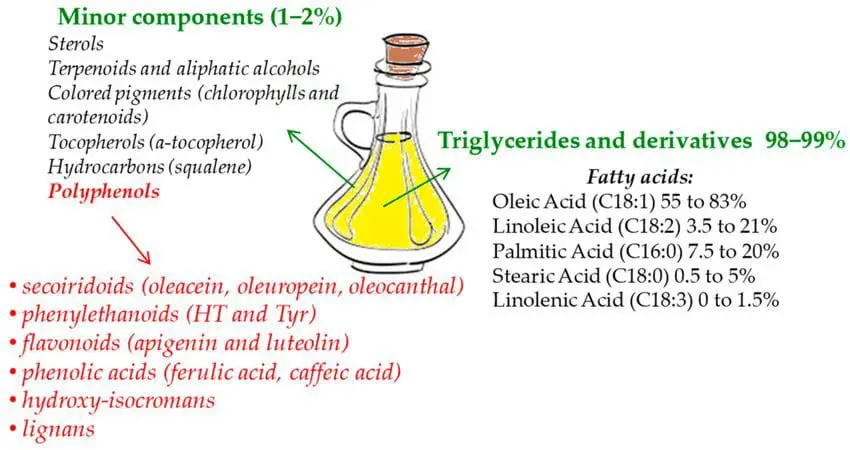
روغن زیتون خالص از چه موادی تشکیل شده است؟ اجزای اصلی فعال روغن زیتون شامل اسید اولئیک، ترکیبات فنلی و اسکوالن است.
روغن زیتون عمدتاً از اسید اولئیک (تا ۸۳٪) و مقادیر کمتری از اسیدهای چرب دیگر از جمله اسید لینولئیک (تا ۲۱٪) و اسید پالمیتیک (تا ۲۰٪) تشکیل شده است. تقریباً ۹۸٪ تا ۹۹٪ از روغن زیتون فوق بکر (بخش صابونی شونده) از تری گلیسیریدها به شکل عمدتاً MUFA (اسید اولئیک)، مقادیر قابل توجهی از چربیهای غیراشباع چندگانه (لینولئیک و آلفا-لینولنیک) و مقادیر کمی از چربیهای اشباع (پالمیتیک ۷.۵٪ تا ۲۰٪ و اسید استئاریک ۰.۵٪ تا ۵٪) تشکیل شده است.
Constituents / Ingredients
Olive oil is composed mainly of the mixed triglyceride esters of oleic acid, linoleic acid, palmitic acid and of other fatty acids, along with traces of squalene (up to 0,7%) and sterols (about 0,2% phytosterol and tocosterols).
به لطف جایگاهش به عنوان یک غذای مورد توجه در رژیم غذایی مدیترانهای (و رژیم غذایی یونانی / کرتی به ویژه)، و به لطف تحقیقات گسترده در مورد ترکیب منحصر به فرد مواد مغذی گیاهی آن، روغن زیتون به یک روغن آشپزی افسانهای تبدیل شده است که مزایای سلامتی آن با سایر روغنهای خوراکی بسیار دشوار است. در میان فهرست گسترده مواد مغذی گیاهی آن، هیچ دسته از مواد مغذی روغن زیتون مهمتر از ... نیست. پلی فنول ها. محتوای پلی فنول این روغن خوشمزه واقعاً شگفتانگیز است!
روغن زیتون بسیار غنی است چربیهای تک غیراشباع و حاوی مقدار کمی ویتامین E و K است. روغن زیتون فوق بکر همچنین سرشار از آنتیاکسیدانها است که برخی از آنها فواید قدرتمندی برای سلامتی دارند. میوه زیتون و روغن زیتون استخراج شده با روش فشردهسازی، علاوه بر کاربردهای آشپزی، طیف گستردهای از کاربردهای درمانی را در تغذیه انسان دارند.
لیست زیر برخی از پلی فنولهای کلیدی موجود در روغن زیتون را نشان میدهد که بر اساس دسته بندی شیمیایی آنها سازماندهی شدهاند:
فنولهای ساده
آنتوسیانیدینها
– tyrosol
– cyanidins
– hydroxytyrosol
– peonidins
ترپنها
فلاونولها
– oleuropein
– quercetin
– ligstroside
– kaempferol
فلاونها
گلیکوزیدهای فلاونوئیدی
– apigenin
– روتین
– luteolin
لیگنانها
اسیدهای هیدروکسی سینامیک
– pinoresinol
– caffeic acid
اسیدهای هیدروکسی بنزوئیک
– cinnamic acid
– vanillic acid
– ferulic acid
– اسید سیرینجیک
– coumaric acid
مواد تشکیل دهنده روغن زیتون
نشان داده شده است که اکثر پلی فنولهای موجود در این لیست، هم به عنوان ... عمل میکنند و هم به عنوان ... آنتیاکسیدانها و همچنین به عنوان ضد التهاب مواد مغذی در بدن. تعداد و تنوع بالای پلی فنولهای موجود در روغن زیتون، فواید بینظیر این روغن آشپزی برای سلامتی را توضیح میدهد.
ترکیب شیمیایی دقیق روغن زیتون میتواند بسته به عواملی مانند گونه زیتون، آب و هوا و خاک باغ زیتون، شرایط رشد، روشهای برداشت و روشهای فرآوری برای استخراج روغن زیتون از میوه زیتون متفاوت باشد.
ingredients of Extra-virgin Olive Oil – EVOO main components
Nutrient Composition of Olive Oil & comparison with Nutrient Composition of other oils
List of the Nutrient Composition and Ingredients of Extra Virgin Olive Oil and Olive Oil vs. other oils
Nutrient composition of extra virgin olive oil:
Extra virgin olive oil is rich in heart-healthy fats, along with vitamin E and vitamin K.
A tablespoon (about 14 grams) of olive oil contains the following nutrients:
Calories: 119
Saturated fat: 14% of total calories
Monounsaturated fat: 73% of total calories (mostly oleic acid)
Polyunsaturated fat (PUFA): 11% of total calories
Vitamin E: 13% of the Daily Value (DV)
Vitamin K: 7% of the DV
Extra virgin olive oil is a great source of antioxidants, which are compounds that help fight inflammation and chronic disease.
The oil’s main antioxidants include the anti-inflammatory oleocanthal, as well as oleuropein, a substance that protects LDL (bad) cholesterol from oxidation.
Some people have criticized olive oil for having a high omega-6 to omega-3 ratio. However, its total amount of polyunsaturated fats is still relatively low, so you probably don’t need to worry.
In addition to extra virgin olive oil, there are many other popular cooking oils available, including regular olive oil, canola oil, vegetable oil, avocado oil, and coconut oil.
Here is a closer look at how extra virgin olive oil compares to these other types of oils:
Yes, olive oil is gluten-free by nature when we’re talking about the main classes (types) of olive oil (pure olive oil, virgin olive oil, extra virgin olive oil). For all olive oils the only real ingredient in olive oil is the olives fruit extract…
There are two exceptions, situations where you need to be a bit careful: 1) when you are dealing with an infused or flavored olive oil. 2) When olive oil is made in a facility that also produces gluten-containing foods
When olive oil is produced in a shared facility that produces gluten-containing foods, there may be a slight possibility for cross-contamination and although the amount of gluten present in an olive oil would be extremely low in these instances, there could potentially be a concern for someone with celiac disease. Its recommended you look for olive oil that is certified gluten-free, or produced in an allergen-free facility.
Infused/Flavored olive oils, the only time you may really run into trouble is when you’re dealing with smoke-flavored olive oil – whether it’s olive oil or any other cooking oil such as canola oil or vegetable oil. In some “natural smoke flavoring,” the gluten-containing grain barley is used as an ingredient. So, these oils should be avoided unless the oil has a gluten-free certification or you’ve ensured that the manufacturer uses a gluten-free version of smoke flavoring.
Is Olive Oil vegan?
Olive oil is a single-ingredient plant-based food, and beside this, during the olive oil production process, there is no addition of animal-derived products.
So even for the strictest vegans, olive oil is perfectly acceptable. Plus, olive oil is also a great source of nutrient-dense fat, which can sometimes be lacking in poorly formulated vegan diets.
The olive tree, Olea Europaea, is native to the Mediterranean basin and parts of Asia Minor. The fruit and compression-extracted oil have a wide range of therapeutic and culinary applications. Olive oil also constitutes a major component of the “Mediterranean diet.” The chief active components of olive oil include oleic acid, phenolic constituents, and squalene. The main phenolics include hydroxytyrosol, tyrosol, and oleuropein, which occur in highest levels in virgin olive oil and have demonstrated antioxidant activity.
Antioxidants are believed to be responsible for a number of olive oil’s biological activities. Oleic acid, a monounsaturated fatty acid, has shown activity in cancer prevention, while squalene has also been identified as having anticancer effects. Olive oil consumption has benefit for colon and breast cancer prevention.
The oil has been widely studied for its effects on coronary heart disease (CHD), specifically for its ability to reduce blood pressure and low-density lipoprotein (LDL) cholesterol.
Antimicrobial activity of hydroxytyrosol, tyrosol, and oleuropein has been demonstrated against several strains of bacteria implicated in intestinal and respiratory infections.
Although the majority of research has been conducted on the oil, consumption of whole olives might also confer health benefits.
Learn more about the Chemical Characteristics of Olive Oil – Fatty Acids, Trans Fatty Acids, Long Chain Fatty Acids, Percentage of Linolenic Acid allowed in olive oil, “Essential” Fatty Acids, Free Fatty Acids (FFA) and Olive Oil Acidity, Polyphenols (Antioxidants), Peroxides, Pigments and Color, Vitamins, Polycyclic Aromatic Hydrocarbons (PAHs) and more…
An informative video on Olive Oil – check the video for more olive oil chemistry, how to keep fresh, how to best use it to give your food a flavor boost
ما یک شرکت خانوادگی با قدمت چند قرن (تأسیس ۱۹۱۲) در تولید روغن زیتون فوق بکر (EVOO) در جزیره کرت در یونان هستیم. روغن زیتون فوق بکر ممتاز کرت و محصولات غذایی آشپزی ما به بیش از ۴۰ کشور در سراسر جهان به شبکهای از شرکای منتخب صادر میشود. با ما تماس بگیرید، شریک تجاری ارزشمند بعدی ما باشید! برای روغن زیتون فوق بکر (EVOO) - ارگانیک (بیو) روغن زیتون فوق بکر (EVOO ارگانیک) - زیتونهای خوراکی یونانی - سرکه بالزامیک - غذاهای آماده، همه از کرت یونان


 عمده فروشی روغن زیتون - تامین کنندگان و توزیع کنندگان عمده روغن زیتون