Olive Oil Ingredients – composition of the Olive Oil
The Olive Oil Ingredients
Learn more about the Chemical Characteristics of Olive Oil – Fatty Acids, Trans Fatty Acids, Long Chain Fatty Acids, Percentage of Linolenic Acid allowed in olive oil, “Essential” Fatty Acids, Free Fatty Acids (FFA) and Olive Oil Acidity, Polyphenols (Antioxidants), Peroxides, Pigments and Color, Vitamins, Polycyclic Aromatic Hydrocarbons (PAHs) and more…
An informative video on Olive Oil – check the video for more olive oil chemistry, how to keep fresh, how to best use it to give your food a flavor boost
Jesteśmy firmą rodzinną z wielowiekową tradycją (założoną w 1912 roku) produkującą oliwę z oliwek extra virgin na Krecie w Grecji. Nasza kreteńska oliwa z oliwek extra virgin i produkty kulinarne są eksportowane do ponad 40 krajów na całym świecie, do starannie wyselekcjonowanej sieci partnerów. SKONTAKTUJ SIĘ Z NAMI, ZOSTAŃ NASZYM KOLEJNYM CENIONYM PARTNEREM BIZNESOWYM! Oliwa z oliwek extra virgin (EVOO) – Organiczna (Bio) Oliwa z oliwek extra virgin (Organic EVOO) – Greckie oliwki stołowe – Octy balsamiczne – Delikatesy, wszystko z Krety w Grecji
Wykazano, że większość polifenoli na tej liście działa zarówno jako przeciwutleniacze i również jako przeciwzapalny Składniki odżywcze w organizmie. Sama liczba i różnorodność polifenoli w oliwie z oliwek pomaga wyjaśnić wyjątkowe korzyści zdrowotne tego oleju kulinarnego.
Dokładny skład chemiczny oliwy z oliwek może się różnić w zależności od takich czynników, jak odmiana oliwek, klimat i gleba gaju oliwnego, warunki uprawy, metody zbioru oraz metody przetwarzania w celu uzyskania oliwy z oliwek z owoców oliwek.
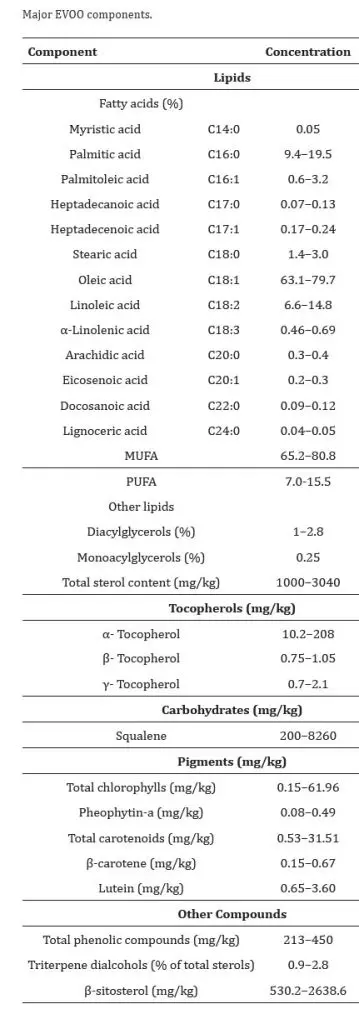
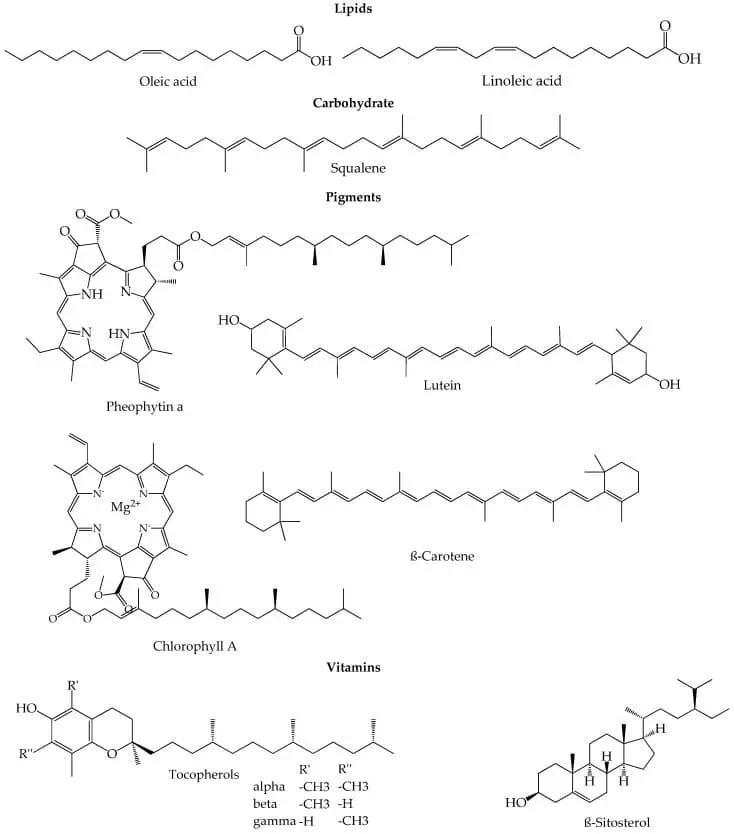
ingredients of Extra-virgin Olive Oil – EVOO main components
Nutrient Composition of Olive Oil & comparison with Nutrient Composition of other oils
List of the Nutrient Composition and Ingredients of Extra Virgin Olive Oil and Olive Oil vs. other oils
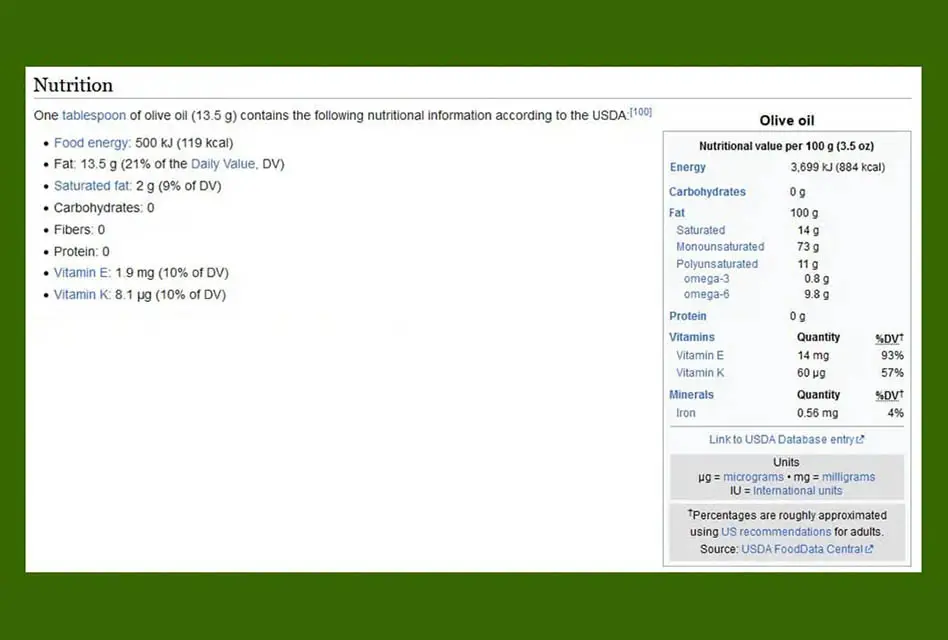
Nutrient composition of extra virgin olive oil:
Extra virgin olive oil is rich in heart-healthy fats, along with vitamin E and vitamin K.
A tablespoon (about 14 grams) of olive oil contains the following nutrients:
Calories: 119
Saturated fat: 14% of total calories
Monounsaturated fat: 73% of total calories (mostly oleic acid)
Polyunsaturated fat (PUFA): 11% of total calories
Vitamin E: 13% of the Daily Value (DV)
Vitamin K: 7% of the DV
Extra virgin olive oil is a great source of antioxidants, which are compounds that help fight inflammation and chronic disease.
The oil’s main antioxidants include the anti-inflammatory oleocanthal, as well as oleuropein, a substance that protects LDL (bad) cholesterol from oxidation.
Some people have criticized olive oil for having a high omega-6 to omega-3 ratio. However, its total amount of polyunsaturated fats is still relatively low, so you probably don’t need to worry.
In addition to extra virgin olive oil, there are many other popular cooking oils available, including regular olive oil, canola oil, vegetable oil, avocado oil, and coconut oil.
Here is a closer look at how extra virgin olive oil compares to these other types of oils:
Yes, olive oil is gluten-free by nature when we’re talking about the main classes (types) of olive oil (pure olive oil, virgin olive oil, extra virgin olive oil). For all olive oils the only real ingredient in olive oil is the olives fruit extract…
There are two exceptions, situations where you need to be a bit careful: 1) when you are dealing with an infused or flavored olive oil. 2) When olive oil is made in a facility that also produces gluten-containing foods
When olive oil is produced in a shared facility that produces gluten-containing foods, there may be a slight possibility for cross-contamination and although the amount of gluten present in an olive oil would be extremely low in these instances, there could potentially be a concern for someone with celiac disease. Its recommended you look for olive oil that is certified gluten-free, or produced in an allergen-free facility.
Infused/Flavored olive oils, the only time you may really run into trouble is when you’re dealing with smoke-flavored olive oil – whether it’s olive oil or any other cooking oil such as canola oil or vegetable oil. In some “natural smoke flavoring,” the gluten-containing grain barley is used as an ingredient. So, these oils should be avoided unless the oil has a gluten-free certification or you’ve ensured that the manufacturer uses a gluten-free version of smoke flavoring.
Is Olive Oil vegan?
Olive oil is a single-ingredient plant-based food, and beside this, during the olive oil production process, there is no addition of animal-derived products.
So even for the strictest vegans, olive oil is perfectly acceptable. Plus, olive oil is also a great source of nutrient-dense fat, which can sometimes be lacking in poorly formulated vegan diets.
The olive tree, Olea Europaea, is native to the Mediterranean basin and parts of Asia Minor. The fruit and compression-extracted oil have a wide range of therapeutic and culinary applications. Olive oil also constitutes a major component of the “Mediterranean diet.” The chief active components of olive oil include oleic acid, phenolic constituents, and squalene. The main phenolics include hydroxytyrosol, tyrosol, and oleuropein, which occur in highest levels in virgin olive oil and have demonstrated antioxidant activity.
Antioxidants are believed to be responsible for a number of olive oil’s biological activities. Oleic acid, a monounsaturated fatty acid, has shown activity in cancer prevention, while squalene has also been identified as having anticancer effects. Olive oil consumption has benefit for colon and breast cancer prevention.
The oil has been widely studied for its effects on coronary heart disease (CHD), specifically for its ability to reduce blood pressure and low-density lipoprotein (LDL) cholesterol.
Antimicrobial activity of hydroxytyrosol, tyrosol, and oleuropein has been demonstrated against several strains of bacteria implicated in intestinal and respiratory infections.
Although the majority of research has been conducted on the oil, consumption of whole olives might also confer health benefits.
Learn more about the Chemical Characteristics of Olive Oil – Fatty Acids, Trans Fatty Acids, Long Chain Fatty Acids, Percentage of Linolenic Acid allowed in olive oil, “Essential” Fatty Acids, Free Fatty Acids (FFA) and Olive Oil Acidity, Polyphenols (Antioxidants), Peroxides, Pigments and Color, Vitamins, Polycyclic Aromatic Hydrocarbons (PAHs) and more…
An informative video on Olive Oil – check the video for more olive oil chemistry, how to keep fresh, how to best use it to give your food a flavor boost
Jesteśmy firmą rodzinną z wielowiekową tradycją (założoną w 1912 roku) produkującą oliwę z oliwek extra virgin na Krecie w Grecji. Nasza kreteńska oliwa z oliwek extra virgin i produkty kulinarne są eksportowane do ponad 40 krajów na całym świecie, do starannie wyselekcjonowanej sieci partnerów. SKONTAKTUJ SIĘ Z NAMI, ZOSTAŃ NASZYM KOLEJNYM CENIONYM PARTNEREM BIZNESOWYM! Oliwa z oliwek extra virgin (EVOO) – Organiczna (Bio) Oliwa z oliwek extra virgin (Organic EVOO) – Greckie oliwki stołowe – Octy balsamiczne – Delikatesy, wszystko z Krety w Grecji
Poniżej znajduje się lista najważniejszych polifenoli zawartych w oliwie z oliwek, uporządkowana według kategorii chemicznej:
Proste fenole
Antocyjanidyny
– tyrosol
– cyanidins
– hydroxytyrosol
– peonidins
Terpeny
Flawonole
– oleuropein
– quercetin
– ligstroside
– kaempferol
Flawony
Glikozydy flawonoidowe
– apigenin
– rutyna
– luteolin
Lignany
Kwasy hydroksycynamonowe
– pinoresinol
– caffeic acid
Kwasy hydroksybenzoesowe
– cinnamic acid
– vanillic acid
– ferulic acid
– kwas syryngowy
– coumaric acid
Składniki oliwy z oliwek
Wykazano, że większość polifenoli na tej liście działa zarówno jako przeciwutleniacze i również jako przeciwzapalny Składniki odżywcze w organizmie. Sama liczba i różnorodność polifenoli w oliwie z oliwek pomaga wyjaśnić wyjątkowe korzyści zdrowotne tego oleju kulinarnego.
Dokładny skład chemiczny oliwy z oliwek może się różnić w zależności od takich czynników, jak odmiana oliwek, klimat i gleba gaju oliwnego, warunki uprawy, metody zbioru oraz metody przetwarzania w celu uzyskania oliwy z oliwek z owoców oliwek.
ingredients of Extra-virgin Olive Oil – EVOO main components
Nutrient Composition of Olive Oil & comparison with Nutrient Composition of other oils
List of the Nutrient Composition and Ingredients of Extra Virgin Olive Oil and Olive Oil vs. other oils
Nutrient composition of extra virgin olive oil:
Extra virgin olive oil is rich in heart-healthy fats, along with vitamin E and vitamin K.
A tablespoon (about 14 grams) of olive oil contains the following nutrients:
Calories: 119
Saturated fat: 14% of total calories
Monounsaturated fat: 73% of total calories (mostly oleic acid)
Polyunsaturated fat (PUFA): 11% of total calories
Vitamin E: 13% of the Daily Value (DV)
Vitamin K: 7% of the DV
Extra virgin olive oil is a great source of antioxidants, which are compounds that help fight inflammation and chronic disease.
The oil’s main antioxidants include the anti-inflammatory oleocanthal, as well as oleuropein, a substance that protects LDL (bad) cholesterol from oxidation.
Some people have criticized olive oil for having a high omega-6 to omega-3 ratio. However, its total amount of polyunsaturated fats is still relatively low, so you probably don’t need to worry.
In addition to extra virgin olive oil, there are many other popular cooking oils available, including regular olive oil, canola oil, vegetable oil, avocado oil, and coconut oil.
Here is a closer look at how extra virgin olive oil compares to these other types of oils:
Yes, olive oil is gluten-free by nature when we’re talking about the main classes (types) of olive oil (pure olive oil, virgin olive oil, extra virgin olive oil). For all olive oils the only real ingredient in olive oil is the olives fruit extract…
There are two exceptions, situations where you need to be a bit careful: 1) when you are dealing with an infused or flavored olive oil. 2) When olive oil is made in a facility that also produces gluten-containing foods
When olive oil is produced in a shared facility that produces gluten-containing foods, there may be a slight possibility for cross-contamination and although the amount of gluten present in an olive oil would be extremely low in these instances, there could potentially be a concern for someone with celiac disease. Its recommended you look for olive oil that is certified gluten-free, or produced in an allergen-free facility.
Infused/Flavored olive oils, the only time you may really run into trouble is when you’re dealing with smoke-flavored olive oil – whether it’s olive oil or any other cooking oil such as canola oil or vegetable oil. In some “natural smoke flavoring,” the gluten-containing grain barley is used as an ingredient. So, these oils should be avoided unless the oil has a gluten-free certification or you’ve ensured that the manufacturer uses a gluten-free version of smoke flavoring.
Is Olive Oil vegan?
Olive oil is a single-ingredient plant-based food, and beside this, during the olive oil production process, there is no addition of animal-derived products.
So even for the strictest vegans, olive oil is perfectly acceptable. Plus, olive oil is also a great source of nutrient-dense fat, which can sometimes be lacking in poorly formulated vegan diets.
The olive tree, Olea Europaea, is native to the Mediterranean basin and parts of Asia Minor. The fruit and compression-extracted oil have a wide range of therapeutic and culinary applications. Olive oil also constitutes a major component of the “Mediterranean diet.” The chief active components of olive oil include oleic acid, phenolic constituents, and squalene. The main phenolics include hydroxytyrosol, tyrosol, and oleuropein, which occur in highest levels in virgin olive oil and have demonstrated antioxidant activity.
Antioxidants are believed to be responsible for a number of olive oil’s biological activities. Oleic acid, a monounsaturated fatty acid, has shown activity in cancer prevention, while squalene has also been identified as having anticancer effects. Olive oil consumption has benefit for colon and breast cancer prevention.
The oil has been widely studied for its effects on coronary heart disease (CHD), specifically for its ability to reduce blood pressure and low-density lipoprotein (LDL) cholesterol.
Antimicrobial activity of hydroxytyrosol, tyrosol, and oleuropein has been demonstrated against several strains of bacteria implicated in intestinal and respiratory infections.
Although the majority of research has been conducted on the oil, consumption of whole olives might also confer health benefits.
Learn more about the Chemical Characteristics of Olive Oil – Fatty Acids, Trans Fatty Acids, Long Chain Fatty Acids, Percentage of Linolenic Acid allowed in olive oil, “Essential” Fatty Acids, Free Fatty Acids (FFA) and Olive Oil Acidity, Polyphenols (Antioxidants), Peroxides, Pigments and Color, Vitamins, Polycyclic Aromatic Hydrocarbons (PAHs) and more…
An informative video on Olive Oil – check the video for more olive oil chemistry, how to keep fresh, how to best use it to give your food a flavor boost
Jesteśmy firmą rodzinną z wielowiekową tradycją (założoną w 1912 roku) produkującą oliwę z oliwek extra virgin na Krecie w Grecji. Nasza kreteńska oliwa z oliwek extra virgin i produkty kulinarne są eksportowane do ponad 40 krajów na całym świecie, do starannie wyselekcjonowanej sieci partnerów. SKONTAKTUJ SIĘ Z NAMI, ZOSTAŃ NASZYM KOLEJNYM CENIONYM PARTNEREM BIZNESOWYM! Oliwa z oliwek extra virgin (EVOO) – Organiczna (Bio) Oliwa z oliwek extra virgin (Organic EVOO) – Greckie oliwki stołowe – Octy balsamiczne – Delikatesy, wszystko z Krety w Grecji
Jakie składniki zawiera czysta oliwa z oliwek? Głównymi aktywnymi składnikami oliwy z oliwek są kwas oleinowy, składniki fenolowe i skwalen.
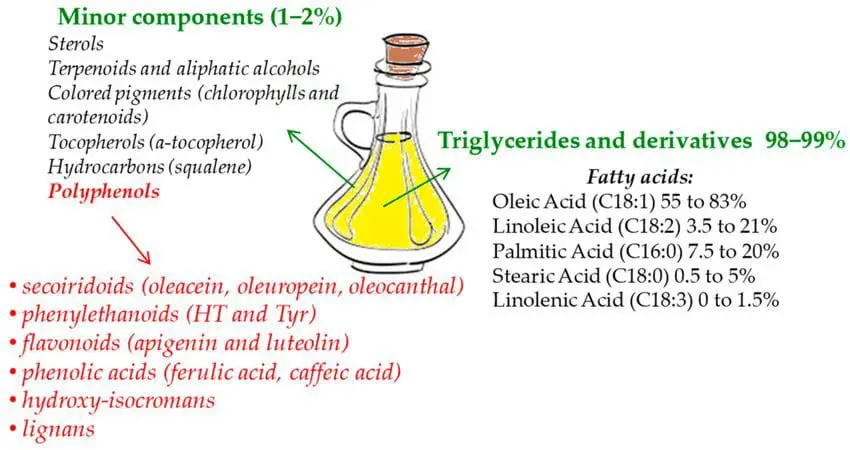
Oliwa z oliwek składa się głównie z kwasu oleinowego (do 83%), z mniejszymi ilościami innych kwasów tłuszczowych, w tym kwasu linolowego (do 21%) i palmitynowego (do 20%). Około 98–99% oliwy z oliwek extra virgin (EVOO) (frakcja zmydlająca) składa się z trójglicerydów, głównie w postaci MUFA (kwasu oleinowego), znacznych ilości tłuszczów wielonienasyconych (linolowego i α-linolenowego) oraz niewielkich ilości tłuszczów nasyconych (palmitynowego 7,5–20% i stearynowego 0,5–5%).
Constituents / Ingredients
Olive oil is composed mainly of the mixed triglyceride esters of oleic acid, linoleic acid, palmitic acid and of other fatty acids, along with traces of squalene (up to 0,7%) and sterols (about 0,2% phytosterol and tocosterols).
Dzięki swojemu statusowi jako głównego składnika diety śródziemnomorskiej (i Dieta grecko-kreteńska (w szczególności) i dzięki szeroko zakrojonym badaniom nad jej unikalnym składem fitoskładników, oliwa z oliwek stała się legendarnym olejem kulinarnym, którego korzyści zdrowotne trudno dorównać innym olejom jadalnym. Wśród bogatej listy fitoskładników, żadna kategoria składników odżywczych oliwy z oliwek nie jest ważniejsza niż jej polifenole. Zawartość polifenoli w tym pysznym oleju jest naprawdę niesamowita!
Oliwa z oliwek ma bardzo wysoką zawartość tłuszcze jednonienasycone i zawiera niewielką ilość witamin E i K. Oliwa z oliwek extra virgin jest również bogata w przeciwutleniacze, z których niektóre mają silne właściwości prozdrowotne. Owoce oliwek i oliwa z oliwek tłoczona metodą tłoczenia mają szeroki zakres zastosowań terapeutycznych, oprócz kulinarnych, w żywieniu człowieka.
Poniżej znajduje się lista najważniejszych polifenoli zawartych w oliwie z oliwek, uporządkowana według kategorii chemicznej:
Proste fenole
Antocyjanidyny
– tyrosol
– cyanidins
– hydroxytyrosol
– peonidins
Terpeny
Flawonole
– oleuropein
– quercetin
– ligstroside
– kaempferol
Flawony
Glikozydy flawonoidowe
– apigenin
– rutyna
– luteolin
Lignany
Kwasy hydroksycynamonowe
– pinoresinol
– caffeic acid
Kwasy hydroksybenzoesowe
– cinnamic acid
– vanillic acid
– ferulic acid
– kwas syryngowy
– coumaric acid
Składniki oliwy z oliwek
Wykazano, że większość polifenoli na tej liście działa zarówno jako przeciwutleniacze i również jako przeciwzapalny Składniki odżywcze w organizmie. Sama liczba i różnorodność polifenoli w oliwie z oliwek pomaga wyjaśnić wyjątkowe korzyści zdrowotne tego oleju kulinarnego.
Dokładny skład chemiczny oliwy z oliwek może się różnić w zależności od takich czynników, jak odmiana oliwek, klimat i gleba gaju oliwnego, warunki uprawy, metody zbioru oraz metody przetwarzania w celu uzyskania oliwy z oliwek z owoców oliwek.
ingredients of Extra-virgin Olive Oil – EVOO main components
Nutrient Composition of Olive Oil & comparison with Nutrient Composition of other oils
List of the Nutrient Composition and Ingredients of Extra Virgin Olive Oil and Olive Oil vs. other oils
Nutrient composition of extra virgin olive oil:
Extra virgin olive oil is rich in heart-healthy fats, along with vitamin E and vitamin K.
A tablespoon (about 14 grams) of olive oil contains the following nutrients:
Calories: 119
Saturated fat: 14% of total calories
Monounsaturated fat: 73% of total calories (mostly oleic acid)
Polyunsaturated fat (PUFA): 11% of total calories
Vitamin E: 13% of the Daily Value (DV)
Vitamin K: 7% of the DV
Extra virgin olive oil is a great source of antioxidants, which are compounds that help fight inflammation and chronic disease.
The oil’s main antioxidants include the anti-inflammatory oleocanthal, as well as oleuropein, a substance that protects LDL (bad) cholesterol from oxidation.
Some people have criticized olive oil for having a high omega-6 to omega-3 ratio. However, its total amount of polyunsaturated fats is still relatively low, so you probably don’t need to worry.
In addition to extra virgin olive oil, there are many other popular cooking oils available, including regular olive oil, canola oil, vegetable oil, avocado oil, and coconut oil.
Here is a closer look at how extra virgin olive oil compares to these other types of oils:
Yes, olive oil is gluten-free by nature when we’re talking about the main classes (types) of olive oil (pure olive oil, virgin olive oil, extra virgin olive oil). For all olive oils the only real ingredient in olive oil is the olives fruit extract…
There are two exceptions, situations where you need to be a bit careful: 1) when you are dealing with an infused or flavored olive oil. 2) When olive oil is made in a facility that also produces gluten-containing foods
When olive oil is produced in a shared facility that produces gluten-containing foods, there may be a slight possibility for cross-contamination and although the amount of gluten present in an olive oil would be extremely low in these instances, there could potentially be a concern for someone with celiac disease. Its recommended you look for olive oil that is certified gluten-free, or produced in an allergen-free facility.
Infused/Flavored olive oils, the only time you may really run into trouble is when you’re dealing with smoke-flavored olive oil – whether it’s olive oil or any other cooking oil such as canola oil or vegetable oil. In some “natural smoke flavoring,” the gluten-containing grain barley is used as an ingredient. So, these oils should be avoided unless the oil has a gluten-free certification or you’ve ensured that the manufacturer uses a gluten-free version of smoke flavoring.
Is Olive Oil vegan?
Olive oil is a single-ingredient plant-based food, and beside this, during the olive oil production process, there is no addition of animal-derived products.
So even for the strictest vegans, olive oil is perfectly acceptable. Plus, olive oil is also a great source of nutrient-dense fat, which can sometimes be lacking in poorly formulated vegan diets.
The olive tree, Olea Europaea, is native to the Mediterranean basin and parts of Asia Minor. The fruit and compression-extracted oil have a wide range of therapeutic and culinary applications. Olive oil also constitutes a major component of the “Mediterranean diet.” The chief active components of olive oil include oleic acid, phenolic constituents, and squalene. The main phenolics include hydroxytyrosol, tyrosol, and oleuropein, which occur in highest levels in virgin olive oil and have demonstrated antioxidant activity.
Antioxidants are believed to be responsible for a number of olive oil’s biological activities. Oleic acid, a monounsaturated fatty acid, has shown activity in cancer prevention, while squalene has also been identified as having anticancer effects. Olive oil consumption has benefit for colon and breast cancer prevention.
The oil has been widely studied for its effects on coronary heart disease (CHD), specifically for its ability to reduce blood pressure and low-density lipoprotein (LDL) cholesterol.
Antimicrobial activity of hydroxytyrosol, tyrosol, and oleuropein has been demonstrated against several strains of bacteria implicated in intestinal and respiratory infections.
Although the majority of research has been conducted on the oil, consumption of whole olives might also confer health benefits.
Learn more about the Chemical Characteristics of Olive Oil – Fatty Acids, Trans Fatty Acids, Long Chain Fatty Acids, Percentage of Linolenic Acid allowed in olive oil, “Essential” Fatty Acids, Free Fatty Acids (FFA) and Olive Oil Acidity, Polyphenols (Antioxidants), Peroxides, Pigments and Color, Vitamins, Polycyclic Aromatic Hydrocarbons (PAHs) and more…
An informative video on Olive Oil – check the video for more olive oil chemistry, how to keep fresh, how to best use it to give your food a flavor boost
Jesteśmy firmą rodzinną z wielowiekową tradycją (założoną w 1912 roku) produkującą oliwę z oliwek extra virgin na Krecie w Grecji. Nasza kreteńska oliwa z oliwek extra virgin i produkty kulinarne są eksportowane do ponad 40 krajów na całym świecie, do starannie wyselekcjonowanej sieci partnerów. SKONTAKTUJ SIĘ Z NAMI, ZOSTAŃ NASZYM KOLEJNYM CENIONYM PARTNEREM BIZNESOWYM! Oliwa z oliwek extra virgin (EVOO) – Organiczna (Bio) Oliwa z oliwek extra virgin (Organic EVOO) – Greckie oliwki stołowe – Octy balsamiczne – Delikatesy, wszystko z Krety w Grecji
Nowe, obszerne badanie dotyczące oliwy z oliwek – korzyści zdrowotne wynikające z jej spożywania i starzenia się (korzyści zdrowotne oliwy z oliwek zapobiegające starzeniu się) Naukowcy odkryli...
Oliwa z oliwek aromatyzowana i oliwa z oliwek aromatyzowana – czym się różnią? Terminy oliwa z oliwek aromatyzowana i oliwa z oliwek aromatyzowana są często używane...
Zioła i aromaty dodawane do oliwy z oliwek extra virgin zmieniają rynek oliwy z oliwek Oleje smakowe mają długą historię, a starożytne cywilizacje wykorzystywały je...
Jakie będą ceny oliwy z oliwek w 2025 roku? Dlaczego w niektórych krajach koszt zakupu oliwy z oliwek extra virgin spadł w tym roku prawie o połowę? Europa...
Wydarzenie informacyjne mające na celu promocję tradycyjnych kreteńskich gajów oliwnych Wydarzenie informacyjne mające na celu promocję tradycyjnych kreteńskich...
Oliwa z oliwek – właściwości organoleptyczne: Oliwa z oliwek to nie tylko zdrowy tłuszcz, ale także złożony i aromatyczny produkt. Właściwości organoleptyczne...
21 odmian greckich oliwek stołowych zalicza się do najlepszych na świecie 21 z 50 najlepszych oliwek stołowych na świecie produkowanych jest w Grecji - 8...


 Hurtowa sprzedaż oliwy z oliwek – Hurtowi dostawcy i dystrybutorzy oliwy z oliwek